
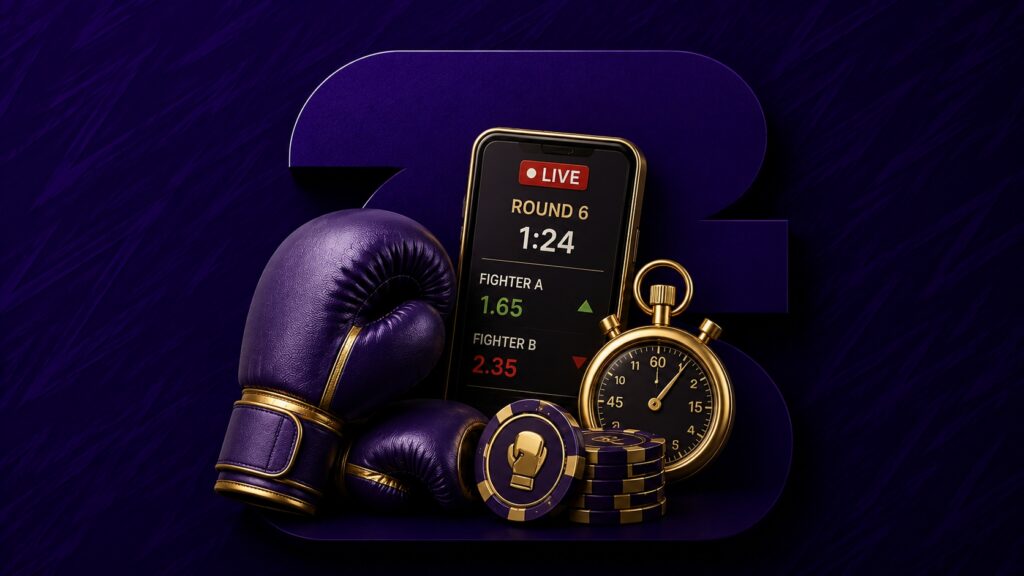
Pre-fight markets are picked over. By the time the opening bell rings, the sharps have already drained any real value from the moneyline, and you’re left fighting for scraps against models that probably know more than you do. Live Boxing Betting is different. Completely different.
The reason is simple: boxing produces more visible, second-by-second information than almost any other combat sport, and most bookmakers’ algorithms struggle to price it fast enough. If you can read what’s actually happening in the ring before the odds catch up, you’re printing equity.
The Information Asymmetry Window
Here’s the thing most bettors miss. There’s usually a 15 to 40 second lag between a meaningful in-ring event and the odds adjusting on most platforms. That window is your edge. A fighter eats a clean shot, his legs go rubbery for a heartbeat, and the line hasn’t moved yet. That’s where you live.
Algorithms catch knockdowns instantly. They’re slower with subtler stuff like a guy circling away from his power hand for the third round in a row, or a corner suddenly screaming about head movement they weren’t screaming about earlier.
Why Books Hate Live Boxing Markets
Sportsbooks don’t love offering deep in-play boxing odds. The margins are decent but the variance is brutal for them, and they know sharp bettors will pick off mispriced moments. So they widen the juice, suspend markets often, and offer slow-loading cash-out values. None of that helps the recreational bettor. But for someone who’s patient and watching closely, it creates pockets of value that just don’t exist pre-fight.
Why Experience Compounds Here
The more rounds of live boxing you actually watch with money on the line, the better your pattern recognition gets. This is one of those skills you can’t really shortcut. You learn what a tired jab looks like at 80% versus 60%. You learn how a corner sounds when they’re worried versus when they’re just coaching.
How In-Play Boxing Odds Shift After Key Moments
Odds movement in live boxing isn’t linear, and it isn’t always rational. Knowing how books react lets you anticipate the next move instead of chasing it.
Knockdown Math
A flash knockdown in round 3 between two evenly matched fighters typically swings the live moneyline 35 to 55 percent toward the dropper. Bigger if the dropped fighter looked hurt, smaller if he popped up immediately and the ref barely counted. But here’s where books overreact: a non-damaging knockdown late in a round often gets priced like a damaging one because the algorithm doesn’t differentiate well.
If you see a fighter dropped by a check hook off-balance, then walk back to his corner without wobbling, the knockdown odds for the next round are usually inflated against him. That’s a fade spot.
Cut and Damage Adjustments
Cuts move the line less than people think, unless the cut is in a fight-ending location (upper eyelid, deep brow). A nosebleed gets a 5 to 10 percent shift. A real gusher above the eye on the cut fighter’s southpaw side facing an orthodox opponent? That can be 20 to 30 percent, because the jab is going to be reopening it all night.
The Between-Rounds Repricing
The biggest odds movements happen in the first 20 to 30 seconds after the bell ends a round. Books are repricing based on the round just completed and starting to factor in fatigue trends. If you’ve been tracking momentum and you know what you want to bet, you want to be clicking before that 30 second mark. After that, the line is usually set for the next round and the value is gone.
Reading Momentum: Visual Cues That Predict the Next Round
Momentum in boxing is mostly physical. It shows up in the body before it shows up on the scorecards, and definitely before it shows up in the odds.
The Fatigue and Damage Checklist
Here’s what I’m scanning for, round by round. Train your eye on these and you’ll be ahead of most live moneyline movement:
- Glove position drop. When the rear hand starts living at chest level instead of cheek level, the right hand is coming. Usually within a round.
- Breath through the mouth. Look at the corner between rounds. If the fighter’s mouth is hanging open and his chest is heaving, he’s in the deep water. Even if he just won the round.
- Foot drag on the back step. Fresh fighters pick their feet up. Tired ones shuffle. You’ll see it on the retreat first.
- Jab frequency collapse. Count jabs in round 1. Count them again in round 6. A 40% drop is normal. A 60% drop means the engine is dying.
- Reaction time on the parry. When a fighter starts getting touched by jabs he was slipping in round 2, the eyes are gone.
- Body shot reaction. A delayed wince, even a half-second one, is gold. Body damage compounds and the next round it gets worse, not better.
The Canelo Jab Test
Quick example. When Canelo’s jab disappears in round 8 of a 12-round fight, that’s not him pacing. That’s him conserving because the legs are heavier than expected. Usually means he’s loading up on counters and not initiating. The live moneyline often doesn’t reflect this because he’s still winning rounds on volume. Method of victory markets become interesting here, because a guy not throwing his jab isn’t setting up a stoppage. Decision prices firm up.
Style Clash Reads
Pay attention to who’s adjusting. The fighter who made the first meaningful adjustment in rounds 2-3 usually controls the middle rounds. If neither has adjusted by round 4 and the volume puncher is landing 60% of his output, you can pretty much bake in the next two rounds going his way.
Decoding Corner Conversations Between Rounds
Modern broadcasts mic up corners more than ever. This is free information and it’s wildly underutilized by bettors.
What Tone Tells You
Calm corners with specific tactical instructions (“double up the jab, then step left”) usually mean the fight is going as planned. Loud corners repeating basics (“you gotta move your head, you GOTTA move your head”) mean panic. The corner knows things you don’t, and they’re watching their fighter up close.
A trainer who suddenly starts asking his fighter questions (“you good? look at me, you good?”) is doing a neurological check. That’s the conversation right before a corner stoppage gets put on the table for the next round.
The Three Phrases That Move Markets
If you hear any of these, react fast:
- “This is your last round” – they’re planning to pull the fighter if things don’t change.
- “Breathe, just breathe” – cardio is gone, and the trainer knows it.
- “He’s got nothing, he’s done” – the corner that says this about the opponent is usually right, because corners see fatigue before commentators do.
Cutman Activity
Watch the cutman’s hands. If he’s working one specific spot with enswell pressure for the full minute, that area is going to swell shut by round 9 or 10. A swollen eye that’s tracking toward closure is one of the most reliable predictors of a late-round stoppage, and the in-play boxing odds rarely price it correctly until it’s obvious to everyone.
Timing Your Bets: When to Strike vs. When to Wait
Most live bettors lose because they bet too often. The edge is in selectivity. You’re looking for specific windows.
The 30-45 Second Window
Between rounds, you’ve got 60 seconds total. The first 15 seconds, the books are still digesting the round. The 30 to 45 second mark is your sweet spot – the line has updated, the corner cam has shown you something useful, and you’ve got time to actually click before the bell. After 45 seconds, you’re rushing, and rushed bets are usually bad bets.
Strike Triggers
Bet when:
- A meaningful event happened but the line moved less than you expected (book is lagging).
- You spotted a fatigue cue the broadcast didn’t mention.
- The corner conversation contradicted the scoring narrative.
- A fighter you backed pre-fight is now getting better in-play odds because of an early scare that didn’t actually hurt him.
Wait Triggers
Sit on your hands when:
- Something dramatic just happened and the line is swinging wildly. Wait one full round to confirm it wasn’t a one-round anomaly.
- You don’t have a clean read on which fighter is more tired. Genuinely. If you’re guessing, you’re gambling, not betting.
- Markets are suspended (which happens constantly during exchanges).
Cashing In: Hedging, Cash-Out, and Round-Specific Markets
This is where most bettors leak money without realizing it. The cash-out button is designed to favor the book, full stop.
The Math Behind Cash-Out Margins
Cash-out offers typically bake in a 5 to 15 percent margin against fair value. Here’s the quick math. Say you bet $100 on Fighter A at +200 pre-fight ($300 total return). After round 3, his live moneyline is -150, which implies he’s about a 60% favorite. Fair value of your bet now is roughly $180 ($300 x 0.60). If the book offers you $158 cash-out, they’re keeping about 12% off the fair value. That’s terrible.
Quick rule: only take cash-out when the offered amount is within 5% of the implied fair value, or when you have a strong read that momentum is about to flip against you. Otherwise, hedge manually using the current live moneyline. You’ll get better pricing almost every time.
Round-Specific Markets
Round betting and method of victory props are where soft lines live. Books update overall winner odds aggressively, but specific round groups (rounds 7-9, for example) often lag. If you’ve identified a fighter showing fatigue cues in round 6 and his opponent is loading up on the body, betting “fight ends in rounds 7-9 by KO/TKO” can offer real value because the book hasn’t caught up to your damage read yet.
A Quick Hypothetical
Imagine a fight where Fighter A opened as a -180 favorite. Round 1, he eats a flash knockdown but gets up clear-eyed. His live moneyline jumps to +120. Knockdown odds for round 2 spike. But you noticed: Fighter B threw everything into that shot and looked gassed walking back to the corner. His mouth is open. Coach is telling him to breathe.
This is the spot. You hit Fighter A at +120, knowing the underlying read says B punched himself out chasing a finish. By round 4, A is back to a -160 favorite and you’ve got a 60+ cent edge banked. That’s a textbook live boxing betting trade.
Building a Live Boxing Betting Routine and Avoiding Pitfalls
Discipline matters more than reads. The sharpest in-play read in the world won’t save you if you’re betting every round on emotion.
The Pre-Fight Setup
Before the first bell, do this:
- Note the opening live moneyline odds and the implied probability.
- Identify each fighter’s stylistic tendencies – who fades, who finishes strong, who cuts.
- Set a max bet ceiling for the night. Live betting is fast and losses compound quickly if you don’t have a hard limit.
- Have one or two pre-identified scenarios you’re hunting (e.g., “if A is still throwing 50+ punches in round 8, I’m backing him to win by decision”).
The Between-Rounds Routine
During the 60-second break:
- Seconds 0-15: watch the fighters walk back. Note the breathing, the legs, the shoulders.
- Seconds 15-30: listen to the corner. Tone first, content second.
- Seconds 30-45: check the updated in-play boxing odds. Compare to your read.
- Seconds 45-55: make the bet or don’t. No bet is a valid choice. Probably the most valid choice most of the time.
- Seconds 55-60: take a breath. Watch the next round with full attention.
Pitfalls to Avoid
The biggest mistakes I see, in rough order of how much money they cost:
- Chasing a knockdown bet. The price is at its worst right after the moment.
- Cashing out at -10% fair value because you’re scared. That’s not protection, that’s a tax.
- Betting every round to “stay engaged.” You’re paying juice every time. Pick spots.
- Ignoring the cards. Even if a fighter looks worse, if he’s up 4 rounds to 1, he’s winning the decision. Method of victory becomes the better play, not switching the moneyline.
- Trusting the broadcast scoring. Commentators score for entertainment. Judges score for connect rates and ring generalship. Big difference.
One last thing. Live boxing betting is fast, loud, and emotionally exhausting if you’re doing it right. Bet what you can afford to lose, and treat each card as a session with a clear stop point. The sport will be there next weekend.
The edge in Live Boxing Betting comes down to seeing one thing the algorithm hasn’t priced yet, and having the patience to wait for that moment instead of forcing action. Most rounds you’ll watch and do nothing. That’s correct. The rounds where the read is clear and the price is wrong are the ones that pay for everything else.