

No Era Penal: The Full Story Behind Football’s Most Controversial Call
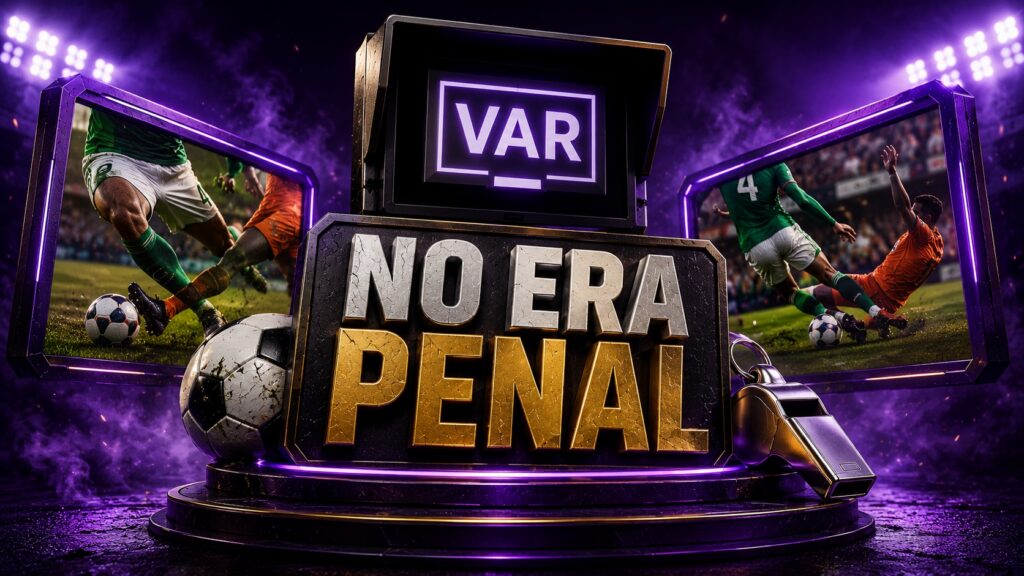
Some moments in football just refuse to die. They live in group chats, in cantina arguments, in the back of every Mexican fan’s mind every four years when the World Cup comes around again. “No era penal” is one of those moments. Three words. A whole national wound.
If you grew up watching El Tri, you already know exactly which match, which minute, and which Dutch winger we’re talking about. If you didn’t – stick around. This thing stopped being just a refereeing controversy a long time ago. It’s closer to folklore now.
What Does “No Era Penal” Mean?
Translated literally, it means “it wasn’t a penalty.” Simple enough on paper. But in Mexico, those three words carry way more than the translation suggests.
It’s a protest. A meme. A rallying cry. A piece of national sports vocabulary that took on its own life after June 29, 2014. You’ll hear it shouted in bars. You’ll see it spray-painted on walls. You’ll even find it tattooed on people who probably have complicated feelings about that decision now, but stand by the sentiment anyway.
The phrase became shorthand for injustice, for being robbed, for that gut-punch feeling when a tournament gets pulled out from under you. Few football phrases have crossed so cleanly into everyday Mexican Spanish the way this one did.
The Match Context
Round of 16. Brazil, 2014. Mexico vs Netherlands at the Estádio Castelão in Fortaleza.
Mexico had come into that knockout game looking sharp. Miguel Herrera’s squad had punched through the group stage with real personality – holding Brazil to a 0-0 draw, with Guillermo Ochoa pulling off the kind of goalkeeping performance that turns men into national heroes overnight. The Netherlands, meanwhile, were rolling. Robben, Van Persie, Sneijder. Louis van Gaal on the touchline. They’d just demolished Spain 5-1 in the group stage. Real contenders.
The stakes were enormous. A win meant the quarterfinals. And for Mexico, that mattered more than anyone outside the country probably understood. El Tri had crashed out in the Round of 16 in six straight World Cups going into that tournament. The “quinto partido” – the elusive fifth match, the quarterfinal breakthrough – had become a full-blown national obsession. Every four years, the hope would build. Every four years, the same wall.
The Incident That Changed Everything
Mexico played well that day. Really well. Giovani dos Santos got the opener early in the second half – a thumping strike, the kind where you see the whole bench erupt before the net even stops moving. For long stretches it genuinely looked like El Tri had figured out how to contain the Dutch attack.
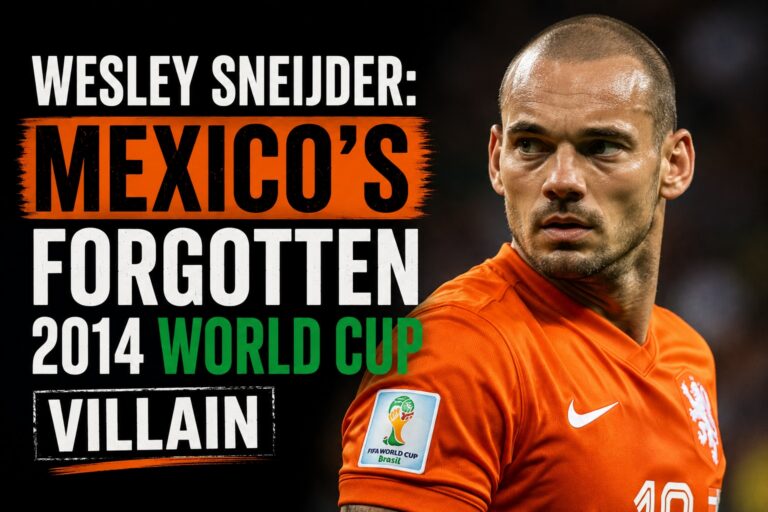
Then Klaas-Jan Huntelaar came on. Then Wesley Sneijder equalized with a thunderous shot in the 88th minute. Suddenly all the air went out of it.
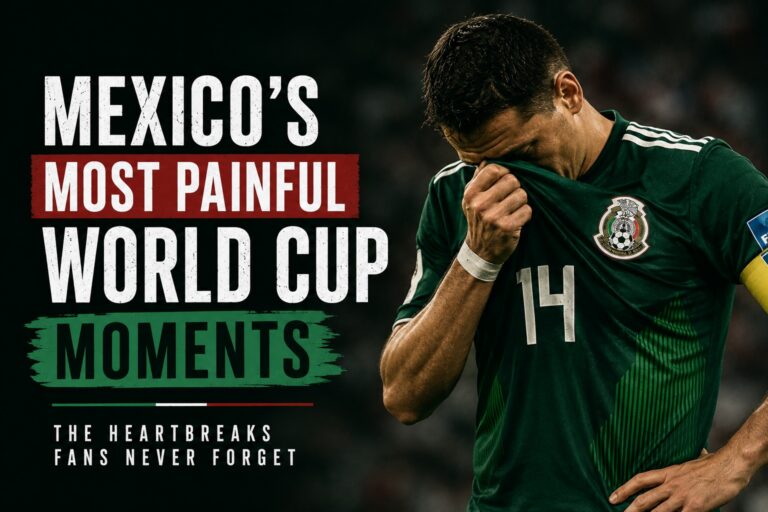
And then the 94th minute. Stoppage time. Arjen Robben drove into the Mexican box, chasing a long ball. Rafael Márquez, Mexico’s veteran captain, came across to defend. There was contact. Light contact. Robben went down.
Portuguese referee Pedro Proença pointed to the spot.
Huntelaar stepped up. Buried it. Netherlands 2, Mexico 1. Game over. Tournament over. Dreams over.
The reaction on the Mexican bench was something else. Miguel Herrera, red-faced, screaming at the fourth official. Players on the pitch just frozen. And somewhere in those raw seconds, the seed of “no era penal” got planted into Mexican football consciousness for good.
Was It Actually a Penalty?
Look, neither side has a perfectly clean case here. Worth being straight about that.
FOR the penalty: Márquez did stretch his leg across Robben’s path. There was contact with the standing leg. Contact that impedes an attacker inside the box can absolutely be called a foul – refs make that call all the time. Defenders are taught not to dive in. Márquez dove in.
AGAINST the penalty: Robben had already been booked earlier in that same tournament for simulation. His reputation for going to ground easily – fair or not – was well established by then. The contact was minimal. And Robben himself, in a moment that honestly deserves its own museum exhibit, admitted after the match that he’d dived in a separate first-half incident, while insisting the second-half call was legitimate.
Watch the replay slowly. Robben’s body was already going down before Márquez’s leg fully arrived. The contact existed – nobody’s seriously denying that – but it wasn’t what actually caused the fall. That’s the technical heart of it. A foul requires that the contact bring the player down or meaningfully impede him. A decent chunk of neutral analysts felt that bar simply wasn’t met here.
Clear foul? Even being generous, no. Soft penalty at best. A tournament-ending gift at worst.
How Modern VAR Might Judge It
No VAR at the 2014 World Cup. It came in for 2018. That timing is the part Mexican fans find genuinely difficult to sit with.
Would VAR have overturned the call? Probably not, actually – and that’s the uncomfortable truth. VAR only steps in for clear and obvious errors. A soft penalty where minimal contact occurred usually survives review, because the on-field referee’s judgment stands unless the footage shows something undeniable.
That said, a VAR check would at least have sent Proença to the monitor. He’d have looked again. He’d have seen Robben’s body language, the timing of the fall, the minimal contact. Whether that changes anything is something nobody can actually answer. You just can’t know. There’s no clean verdict sitting somewhere waiting to be found, just footage that people read differently depending on which shirt they’re wearing.
Mexican fans exist partly in a parallel universe where VAR was available that day and El Tri reached the quarterfinals. That universe is comforting. Also completely unprovable. Which somehow makes it worse.
Why Mexico Never Forgot
Six straight World Cups eliminated in the Round of 16. Always one game short. Always close enough to feel it slipping.
That 2014 team felt different, though. Ochoa was a wall. Herrera was a genuine character – a coach the country actually loved. The football was brave. And then it ended like that, in stoppage time, on a call that nobody in Mexico believed in.
The hurt didn’t fade. It calcified. “No era penal” became something parents shouted at TVs during replays. Something fans wore on shirts. Something Herrera brought up in interviews for years afterward. It became a marker of identity, of shared grievance, of “we know what we saw and nobody can tell us different.”
Football fans hold onto injustice like that. Argentines still talk about the Hand of God as though it happened last month. The English still bring up Maradona. Every football culture has its permanent wound. Mexico got one of the cleanest examples of the genre that afternoon in Fortaleza.
Media Reaction and Global Debate
The Mexican press lost its mind entirely. Television panels debated it for weeks. Newspapers ran freeze-frames on their covers. Herrera, never shy with his opinions, called out Proença directly and was eventually fined by FIFA for his comments about the officiating.
Globally, reactions were split. European outlets mostly defended the call as a stretch but defensible. South American media leaned toward Mexico’s side. English-language commentary went either way, though plenty of pundits acknowledged the penalty was, at minimum, very soft.
Robben’s earlier admission of diving in the first half didn’t help Dutch credibility. It became one of those rare situations where a player essentially confirmed part of the opposing narrative himself. The controversy stopped being purely about one refereeing call and became a wider question – about reputation, about decision-making under pressure, about whether stoppage-time penalties get handed out too easily when a big name hits the turf.
How “No Era Penal” Became a Football Meme
The phrase escaped football entirely. It became a meme template in Mexico for any perceived injustice, no matter how unrelated. Bad grade on an exam? No era penal. Got fired? No era penal. Girlfriend left you? Definitely no era penal.
Internet culture picked it up and ran hard with it. Remixes, songs, autotuned Herrera clips, t-shirts, stickers on car bumpers. One of those phrases that completely transcends its original context. You can use it ironically now even if you barely remember the match.
The pain is real. The meme is also real. Both things coexist without canceling each other out, which is sort of the most human outcome you could hope for from a football controversy.
Greatest Football Controversies Comparison
Where does “no era penal” rank among football’s great controversies? Genuinely fun debate, that one.
Maradona’s Hand of God in 1986 is probably still the gold standard – it involves actual admitted cheating, which gives it a completely different flavor. Then there’s the Frank Lampard ghost goal against Germany in 2010 that pushed FIFA toward goal-line technology. The Thierry Henry handball against Ireland. The Battle of Santiago. Suárez handballing on the line against Ghana in that same 2010 tournament.
“No era penal” sits in a slightly different category from most of those. It wasn’t a moment of deliberate cheating by a player – debatable, depending on your read of Robben. It was a refereeing decision that an entire country found impossible to accept. The closest comparison might actually be the disallowed Mexico goal against Argentina in 2010, which felt cruel but was at least technically defensible on offside grounds.
What makes the 2014 call linger is the combination of everything hitting at once. Stoppage time. A historic tournament barrier that had never been broken. A player with a known diving reputation. Minimal contact. No VAR. Every single condition for maximum emotional damage was stacked up that afternoon in Fortaleza.
Over a decade later, Mexicans still say it. Still mean it. Still feel it. The Round of 16 curse kept going – 2018, same stage, gone again. 2022, didn’t even get that far. But no exit has stung quite like Proença pointing at the spot and Huntelaar calmly slotting it home.
“No era penal” isn’t really a complaint anymore. It’s a piece of Mexican football memory that refuses to be softened or filed away. Some calls don’t get forgotten. The whistle blew in Fortaleza a long time ago. In Mexico, that final minute is still running.