


Wesley Sneijder: El villano olvidado del dolor mundialista de México en 2014
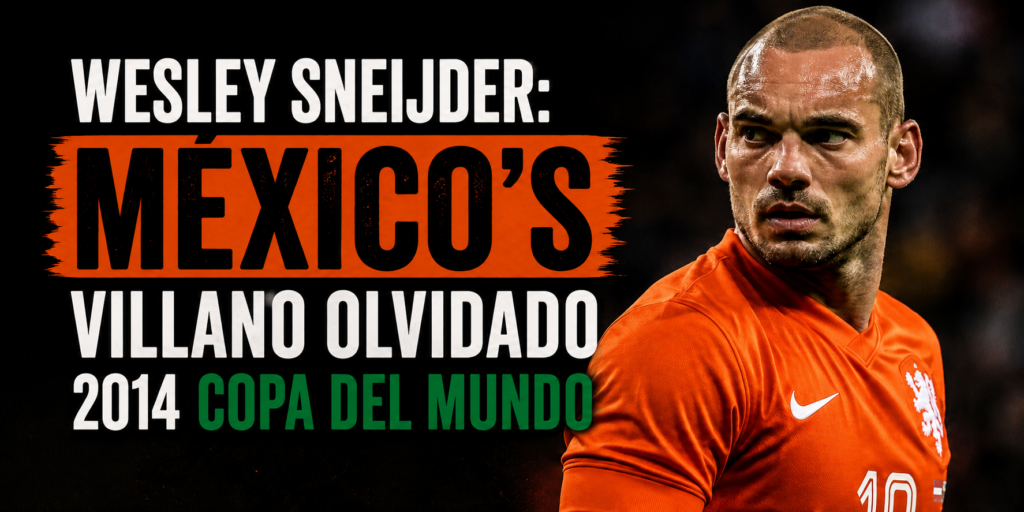 Visual creado con IA
 Menciona el verano de 2014 con cualquier aficionado mexicano al fútbol y la reacción es casi automática. Robben. El clavado. El árbitro. “No Era Penal.” Básicamente es un reflejo a estas alturas, una herida que el país vuelve a abrir cada cuatro años sin falta.
Pero aquí está el detalle: antes de que Robben cayera al pasto, antes de que sonara el silbato, antes de que el dolor tuviera nombre, alguien más ya había hecho el verdadero daño. Alguien que de hecho anotó. Alguien que arrastró físicamente ese partido hacia los Países Bajos a pura fuerza de voluntad. Y casi nadie lo menciona.
Wesley Sneijder. El hombre con el que México olvidó enojarse.
Por qué México todavía habla de este partido
Algunas derrotas simplemente se desvanecen. Otras se quedan por años. México vs Países Bajos 2014 pertenece de lleno al segundo grupo, y ya pasó más de una década sin señales de que vaya a desaparecer.
Esto no fue una eliminación cualquiera en octavos de final. Se sintió genuinamente diferente. México había sido el mejor equipo durante largos tramos en Fortaleza, el menos favorito jugando sin miedo, luciendo como un equipo que de verdad creía que podía sacudirse la famosa maldición del “quinto partido”. El país entero se detuvo. Las escuelas hicieron pausa. Los restaurantes se vaciaron. Y luego, en aproximadamente seis minutos de fútbol, todo se vino abajo.
El dolor no fue solo por perder. Fue por cómo pasó. La narrativa de la injusticia se apoderó casi al instante, y “No Era Penal” se convirtió en algo que escuchabas en bodas, en taxis, en chistes políticos. Toda una generación de aficionados mexicanos al fútbol carga esa tarde como una pequeña cicatriz que no le pueden explicar bien a nadie que no estuviera viendo.
El partido que México controló
Vale la pena regresar a lo que realmente pasó en la cancha, porque la historia se ha aplanado tantas veces que la gente genuinamente olvida lo bien que jugó México ese día.
El plan de Miguel Herrera fue genuinamente agudo. Rafa Márquez anclando una línea de tres, los carrileros empujando por las bandas, y Giovani dos Santos desplazándose hacia los medios espacios donde el mediocampo neerlandés no se ponía de acuerdo sobre quién debía marcarlo. El Tri presionó alto, mantuvo el balón cuando lo necesitó, y salió rápido cuando se abría el espacio.
Ochoa fue Ochoa. Sus actuaciones en la fase de grupos en Brasil ya lo habían convertido en héroe nacional, y contra los neerlandeses simplemente siguió igual con atajadas que rozaban lo ridículo.
Luego el disparo de Giovani justo después del medio tiempo. Un tiro curvo y descendente desde fuera del área que venció por completo a Cillessen. 1-0. El estadio se inclinó hacia México. La batalla táctica, justo en ese momento, la estaba ganando Herrera.
Los Países Bajos lucían descolocados. Van Persie estaba aislado. Robben se seguía metiendo en el tráfico. El mediocampo no encontraba ningún ritmo. Por unos sesenta minutos, México lucía como un equipo genuinamente al borde de hacer historia.
Por qué Robben se convirtió en el rostro del dolor
Entonces, ¿por qué Robben terminó cargando con toda la culpa?
Es sencillo, la verdad. Él es el que cayó. Él es al que Márquez tocó, o no, dependiendo de cuál repetición estés viendo por centésima vez. Y él es el que admitió, días después del partido, haberse clavado antes. Esa admisión por sí sola bastó para cimentarlo como villano permanente en la memoria del fútbol mexicano.
“No Era Penal” pegó porque le dio a la gente algo a qué aferrarse. Una razón que no fuera “nos quedamos sin gasolina” o “no lo supimos cerrar”. Es mucho más fácil culpar a un árbitro y a un extremo neerlandés conocido por irse fácil al piso que sentarse con lo menos cómodo: la fatiga, el colapso táctico, la forma en que México dejó de atacar.
Robben se convirtió en el símbolo. El rostro. El meme. Y honestamente, algo de eso es justo, porque el penal sí terminó el partido. Pero los símbolos no son el panorama completo. Son la parte de la historia más fácil de retener, no necesariamente la más precisa.
El cambio táctico que lo cambió todo
Esta es la parte que la mayoría de los resúmenes se salta, y honestamente es la más importante de toda la tarde.
Van Gaal vio el partido escapándose. No es un técnico que entre en pánico fácilmente, pero lee los partidos en tiempo real y toma decisiones frías. Salió Martins Indi. Entraron Huntelaar y Depay. Los neerlandeses se fueron más directos, empezaron a inundar el área y, lo crucial, Sneijder fue empujado más arriba a un rol libre detrás de los delanteros.
México, mientras tanto, andaba con el tanque vacío. Fortaleza estaba brutalmente caliente. El tipo de calor que te come las piernas estés en forma o no, y el sistema de Herrera dependía absolutamente de la intensidad. Una vez que la presión cayó, El Tri se metió más atrás. Luego más atrás todavía. Los carrileros dejaron de subir. El mediocampo se comprimió. Holanda no le robó el impulso a México tanto como México se lo entregó en silencio, retrocediendo diez metros cada pocos minutos hasta que ya no quedó a dónde ir.
Van Gaal ganó el argumento táctico. En silencio, metódicamente, mientras los ojos de todos seguían a Robben.
Entra Wesley Sneijder
Sneijder había estado ordenado pero bastante invisible durante la mayor parte del partido. El tipo de actuación en la que honestamente te olvidas de que está ahí. Pero una vez que Van Gaal reorganizó las cosas y Sneijder tuvo la libertad de moverse entre líneas, algo cambió bastante rápido.
Empezó a pedir el balón. A caer en huecos donde México no tenía a nadie marcándolo. A dictar el ritmo de una manera que ningún jugador neerlandés había logrado en los primeros 75 minutos. Casi podías ver el momento en que decidió que el partido aún no estaba perdido.
Luego el minuto 88. Un córner enredado, un cabezazo de despeje, el balón cayéndole al borde del área. Sin titubear. Un disparo bajo, limpio y fuerte que pasó a Ochoa. 1-1.
Ese gol hizo algo más allá de solo empatar el marcador. Los hombros se cayeron en el lado mexicano casi de inmediato. Las piernas se hicieron más pesadas. La banca se quedó atónita. Después de aguantar por casi media hora, después de defender como si la vida les fuera en ello, El Tri de pronto necesitaba encontrar otra marcha, y no quedaba nada.
Sneijder siguió moviendo los hilos después de eso. Siguió encontrando a Robben. Siguió arrastrando defensas mexicanos un paso fuera de posición. El penal en tiempo de compensación salió directamente de una secuencia de posesión que él estaba orquestando.
El gol fue suyo. El control fue suyo. El impulso fue completamente suyo. Robben se llevó los titulares, pero Sneijder construyó la remontada desde cero.
¿México recordó al villano equivocado?
Una pregunta con la que vale la pena quedarse. Si Sneijder no empata en el 88, ¿el momento de Robben llega a pasar?
No. México avanza. La controversia del penal no existe. “No Era Penal” nunca se convierte en frase. El partido vive en la memoria como una valiente victoria mexicana ante un gigante europeo, el tipo de historia que moldea una identidad futbolística por toda una generación.
Sneijder no es el villano por ningún clavado. Es el villano porque hizo que el clavado importara. Sin su gol, el resto de la secuencia es completamente irrelevante. Él puso a México de nuevo en la posición donde una mala decisión podía terminar con todo.
Y aun así, pregúntale a los aficionados mexicanos hoy y casi nadie menciona su nombre. Lo cual es genuinamente extraño cuando te sientas a pensarlo. El tipo que de hecho te anotó, en un partido de eliminación directa, en el minuto 88, recibe menos odio duradero que el tipo que se cayó. La memoria futbolística de verdad funciona a su manera rara.
Robben vs Sneijder: símbolo vs realidad
Robben es el villano emocional. Sneijder es el villano futbolístico. Y honestamente, puedes sostener ambas cosas como ciertas sin que sea una contradicción.
Robben le dio a México algo a qué apuntar. Algo para poner en playeras, hashtags y pancartas de protesta. Encaja perfectamente en la narrativa de la injusticia. Es el personaje que la historia necesitaba.
Sneijder le dio a México la herida real. El daño táctico. El cambio en el marcador. El giro en el impulso que dejó que todo lo demás sucediera. Es al que un analista táctico marcaría primero si quitaras toda la emoción y volvieras a ver la cinta.
Uno terminó el partido. El otro lo abrió.
Si vas a ser honesto sobre qué le costó a México esa tarde, Sneijder merece su parte de la culpa. En esos últimos quince minutos fue el mejor jugador en la cancha por bastante margen, y sus decisiones convirtieron lo que parecía una victoria mexicana famosa en una de las peores noches futbolísticas del país.
Por qué este partido todavía duele al fútbol mexicano
Más de una década después y la cosa todavía no afloja su agarre. La obsesión con el “quinto partido” sigue viva y coleando. Cada ciclo mundialista, las mismas preguntas vuelven a aparecer. A cada técnico le preguntan por Fortaleza tarde o temprano. Cada eliminación en octavos desde entonces se ha filtrado a través del lente de esa tarde en el calor.
Países Bajos vs México 2014 no es solo un resultado en los libros de récords. Es un hito psicológico. Un antes y un después. Un partido que reformó cómo se ve a sí mismo el fútbol mexicano cuando llegan los momentos más grandes, y no de manera positiva.
Parte de por qué el dolor persiste, quizás, es porque el país lloró al hombre equivocado. Culpar a Robben fue fácil: no requería ninguna autoevaluación incómoda. Culpar a Sneijder habría significado mirar el colapso táctico, la fatiga, los cambios, la forma en que México simplemente dejó de atacar. Eso es más difícil de enfrentar. Pega más cerca de casa.
Robben se clavó. El árbitro sopló el silbato. Ambas cosas ciertas. Pero Sneijder anotó. Sneijder controló. Sneijder abrió a México antes de que cualquier controversia siquiera llegara a escena.
El villano que México recuerda no está equivocado. Solo está incompleto. El más callado, el que vestía el número 10 ese día en Fortaleza, hizo la mayor parte del daño real. Y en algún lugar entre todas las repeticiones y los documentales y las discusiones de sobremesa a altas horas de la noche, probablemente él también merece una mención.
Porque si este partido va a seguir doliendo, y claramente lo va a hacer, más vale que duela por las razones correctas.