
Rivalidades Históricas del Mundial: Los Duelos Internacionales del Futbol que Definieron el Torneo
 Visual creado con IA
 Hay algo en un partido de revancha del Mundial que el futbol de clubes simplemente no puede igualar. Puedes amar a tu club, claro. Puedes odiar a tus rivales locales con cada célula de tu cuerpo. Pero ¿cuando dos naciones se enfrentan en una cancha del Mundial con viejas heridas todavía a medio cerrar? Eso es un animal completamente distinto.
Fronteras. Guerras. Goles robados. La Mano de Dios. Penales fallados frente a 80,000 personas que jamás olvidarán tu nombre. Estas rivalidades en realidad no se tratan de futbol. Bueno, sí lo son. Pero también no. Cargan con décadas de orgullo, política y odio que el resto de nosotros podemos ver desarrollarse cada cuatro años.
Aquí en México, conocemos este sentimiento más que la mayoría. Cualquiera que haya vivido 1986, o esa decepción contra Argentina en los Octavos de Final (más de una vez), lo entiende por instinto. Así que hablemos de las rivalidades que de verdad construyeron el alma del torneo.
¿Qué Hace una Verdadera Rivalidad del Mundial?
No todo partido grande califica. Un juego famoso es solo un juego famoso. Una rivalidad necesita más.
Para mí, las verdaderas rivalidades del futbol internacional necesitan al menos algunos de estos ingredientes:
Encuentros repetidos. No puedes construir odio a partir de un solo enfrentamiento. Los equipos tienen que seguir cruzándose en los peores momentos posibles, en las rondas eliminatorias, en finales, en pesadillas de eliminatorias que persiguen a los jugadores hasta el retiro.
Algo en juego que duela. Trofeos levantados. Trofeos perdidos. Eliminaciones que sumen a naciones enteras en luto. Si nadie lloró, no fue una rivalidad.
Un momento icónico, o dos, o cinco. Goles que todos recuerdan sin necesidad de YouTube. La mano de Maradona. El cabezazo de Zidane. Una tanda de penales que arruinó a una generación.
Algo más profundo por debajo. Geografía, política, guerra, bagaje colonial, choques de filosofías futbolísticas. Las mejores rivalidades famosas del Mundial siempre tienen una capa que no tiene nada que ver con el futbol, y de alguna manera todo que ver con él.
Así que, teniendo todo eso en mente, aquí están las diez que de verdad importan.
Top 10 de Rivalidades Históricas
10. España vs Países Bajos
 Visual creado con IA
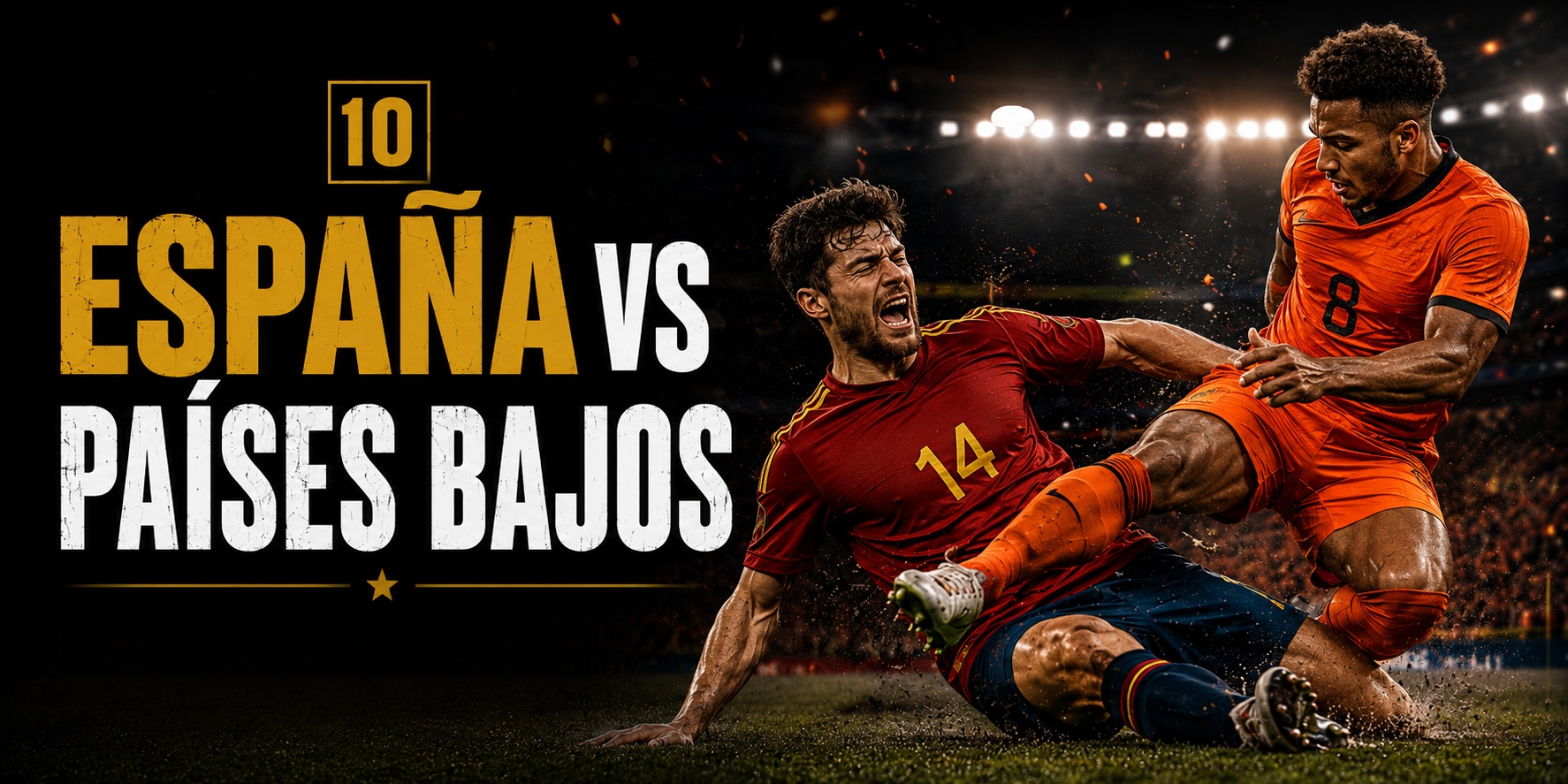
Más nueva que las otras, pero se ganó su lugar en una noche brutal. La final de 2010 en Johannesburgo se suponía que sería una celebración de los estilos más bonitos del futbol. En cambio se convirtió en un concurso de patadas. La planchada estilo karate de Nigel de Jong al pecho de Xabi Alonso todavía es difícil de ver. Catorce tarjetas amarillas. Una roja.
Luego, cuatro años después, los neerlandeses se cobraron su venganza de forma espectacular. Brasil 2014, fase de grupos, y España era la campeona defensora. El cabezazo volador de Robin van Persie es uno de esos momentos en que recuerdas exactamente dónde lo viste. Marcador final: 5-1. Los campeones fueron demolidos. Toda una era terminó en 90 minutos.
Historia corta. Enorme peso emocional.
9. Brasil vs Francia
 Visual creado con IA
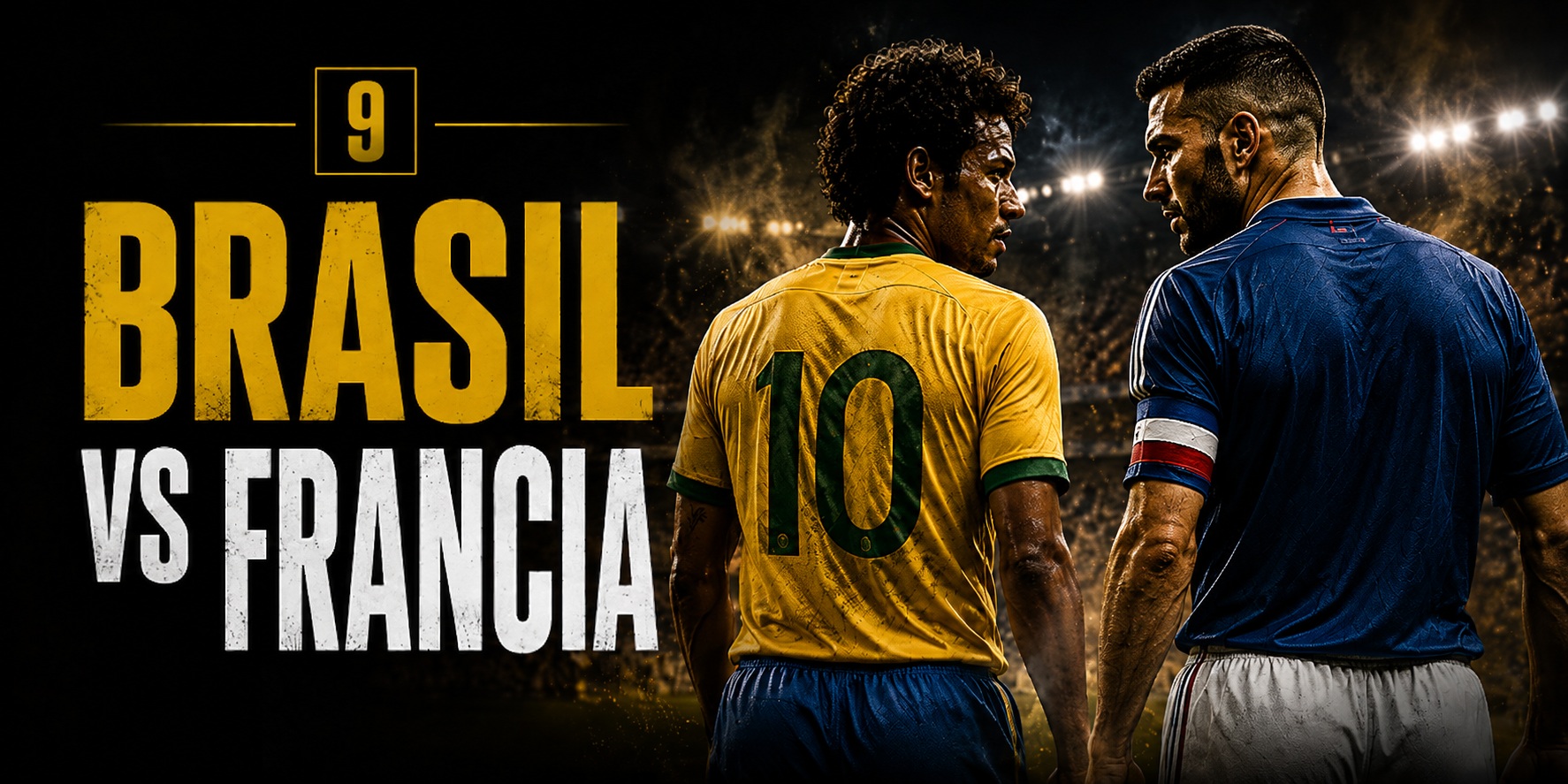
Esta les duele a los brasileños de una manera muy específica. Los cuartos de final de 1986 en Guadalajara podrían ser genuinamente el partido más hermoso jamás jugado en un Mundial – Zico falló un penal, Sócrates falló en la tanda, Francia avanzó. Los románticos del futbol todavía discuten que ese partido fue la verdadera final de aquel torneo.
Luego 1998. Zidane, dos cabezazos, la final en París. La generación dorada de Brasil rota frente a la nación anfitriona. Y de nuevo en 2006, Zidane orquestó otra victoria en cuartos de final sobre Ronaldo, Ronaldinho, Kaká, todos ellos. Tres encuentros. Tres victorias francesas. Brasil nunca llegó a emparejar las cosas.
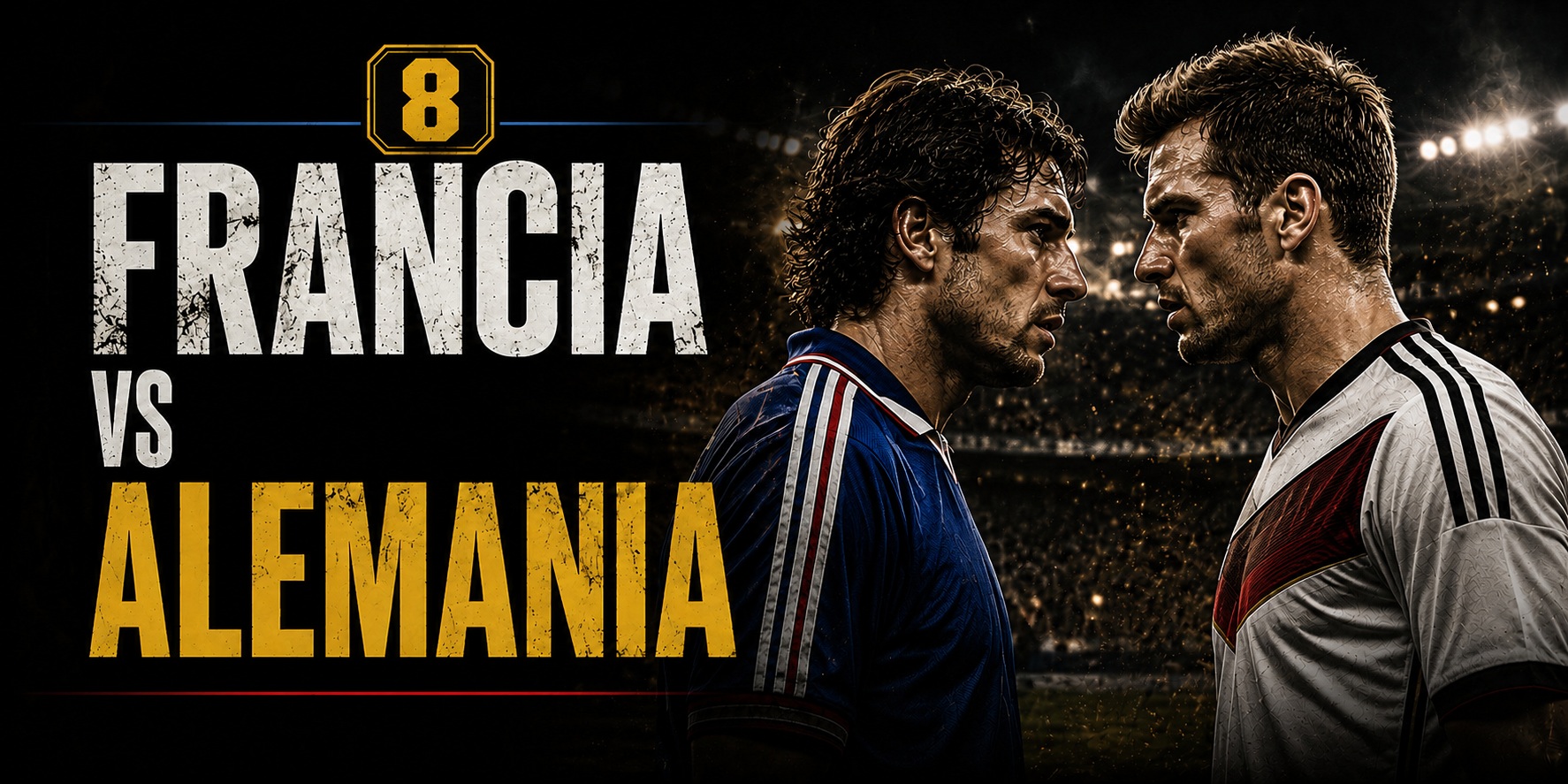
8. Francia vs Alemania
 Visual creado con IA
Si solo conoces un momento de esta rivalidad, es Harald Schumacher destruyendo a Patrick Battiston en 1982. El portero sale disparado. Aplasta al defensor francés. Battiston pierde dientes, cae inconsciente, no se marca falta. Francia quedó eliminada en penales tras ir ganando 3-1 en tiempo extra – un resultado tan doloroso que en Francia todavía hablan de Sevilla ’82 como una tragedia nacional.
Alemania volvió a eliminar a Francia en 1986. Francia por fin se cobró su venganza en 2014, y luego en la fase de grupos de 2022 se evitó el cruce pero el fantasma permanece. La historia política se asienta debajo de todo aquí, obviamente. Dos vecinos que han peleado guerras mucho más feas que esta.
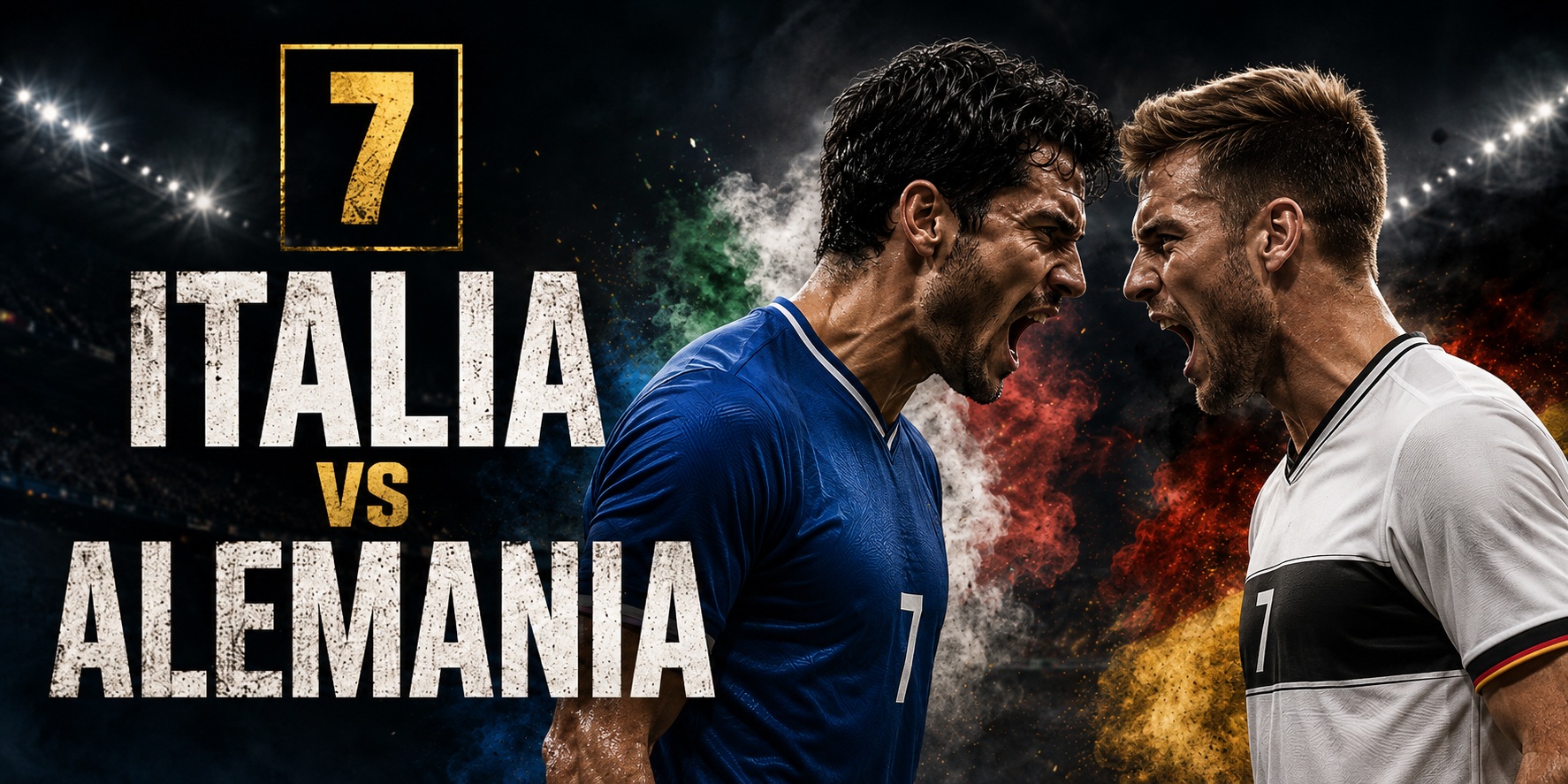
7. Italia vs Alemania
 Visual creado con IA
Los italianos tienen una frase para esta rivalidad. “Germania non si batte, si stanca.” A Alemania no la vences, la cansas. Y históricamente, eso es exactamente lo que pasa.
La semifinal de 1970 en la Ciudad de México – el Estadio Azteca, Italia 4-3 Alemania tras tiempo extra. Cinco goles en los 30 minutos extra. Locura genuina. Hay literalmente una placa afuera del Azteca que lo conmemora, lo cual honestamente te dice todo sobre cómo cayó ese partido.
Luego 1982, la final, Italia gana 3-1 con Paolo Rossi en su mejor momento. Después 2006, la semifinal en Dortmund, Grosso y Del Piero en tiempo extra, rompiendo corazones alemanes en suelo alemán. Italia ha sido dueña de este duelo en el Mundial. Los alemanes odian no poder descifrarlo.
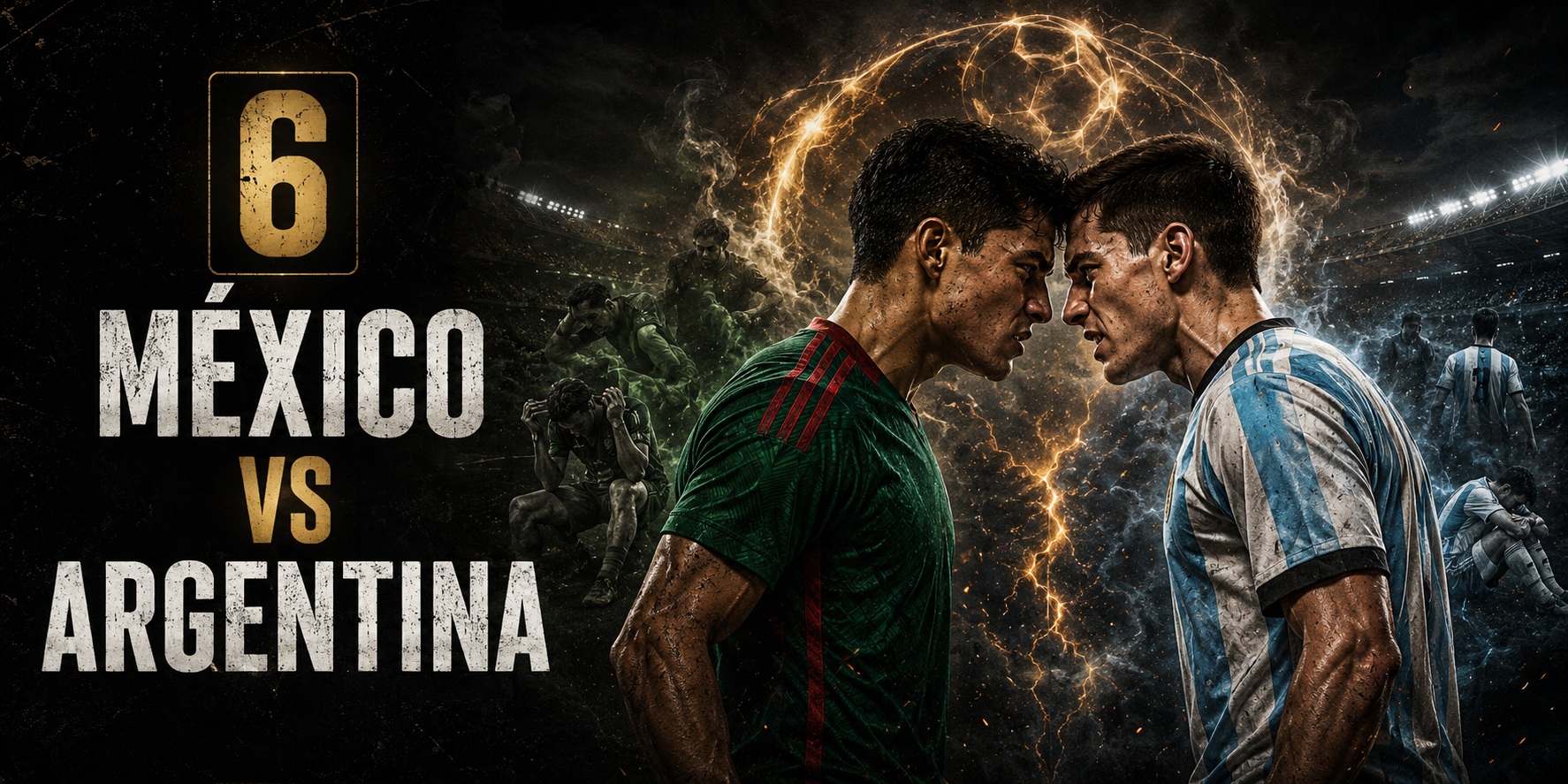
6. México vs Argentina
 Visual creado con IA
Ahora sí llegamos a algo personal. La rivalidad de México vs Argentina no es solo deportiva, es tortura emocional para toda una generación de aficionados mexicanos.
2006, Octavos de Final, Maxi Rodríguez marca esa volea en tiempo extra. Ya sabes cuál. Fuera del área, por encima de Sánchez, al ángulo. México eliminado.
2010, Octavos de Final de nuevo. El gol claramente en fuera de juego de Tévez. La repetición mostrada en la pantalla del estadio. Los jugadores argentinos sonriendo con sorna. México eliminado. Otra vez.
2022, fase de grupos en Qatar. Messi por fin le marca a México tras años de quedar cerca. Argentina gana 2-0. Terminan levantando el trofeo. México se va a casa.
El patrón es casi cruel. México juega bien. México cree. Luego sucede Argentina. Hay algo cósmico en ello que los aficionados aquí entienden sin que se les tenga que explicar.
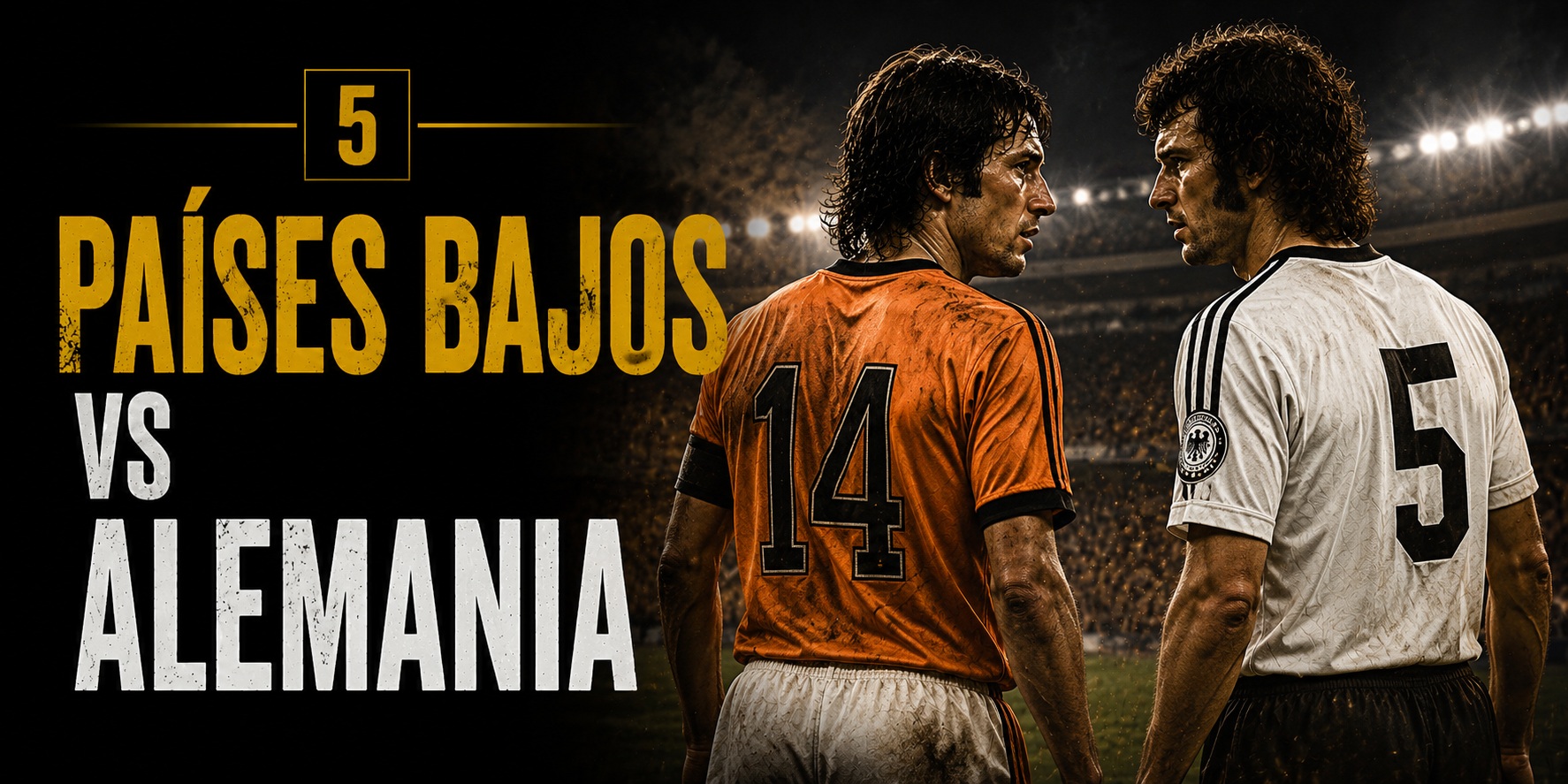
5. Países Bajos vs Alemania
 Visual creado con IA
Esta tiene la guerra en su ADN. Los neerlandeses no pretenden lo contrario. La ocupación nazi, las bicicletas robadas, el resentimiento, todo eso se canaliza en 90 minutos cada vez que estos dos se enfrentan.
Final del Mundial de 1974. La generación neerlandesa del totaalvoetbal – Cruyff, Neeskens, todo eso – perdió ante Alemania Occidental en Múnich. Los neerlandeses se pusieron al frente antes de que un jugador alemán siquiera tocara el balón. Aun así perdieron. Esa herida nunca cerró.
1990, Octavos de Final, Rijkaard escupe el cabello de Völler. Ambos expulsados. Uno de los momentos más feos en la historia del Mundial. Los neerlandeses por fin vencieron a Alemania en torneos grandes en la Euro, pero específicamente en el Mundial, Alemania lleva la ventaja. Los neerlandeses te dirán que la final de 1974 estuvo arreglada. Algunos todavía lo creen.
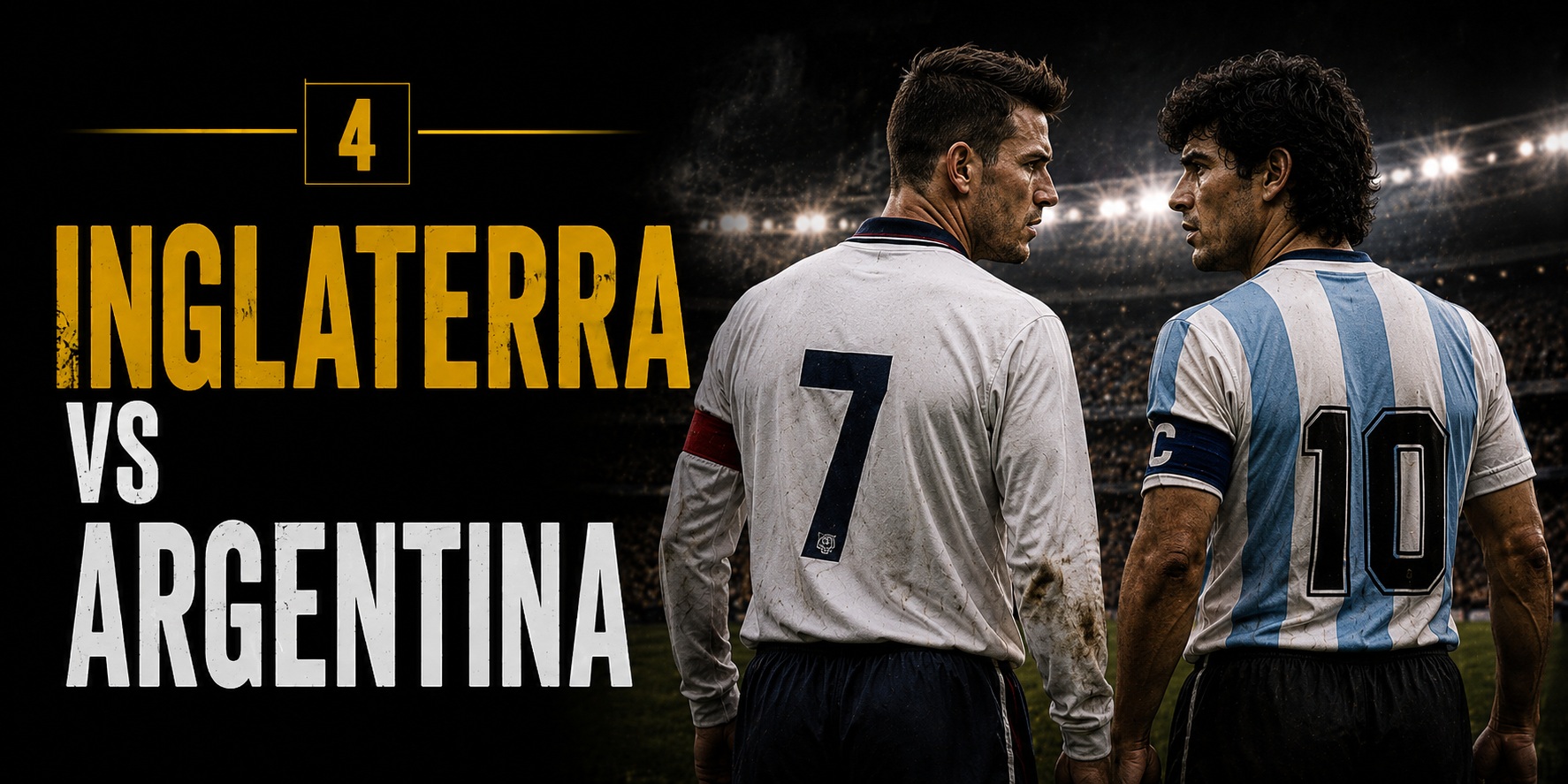
4. Inglaterra vs Argentina
 Visual creado con IA
Las Malvinas. Ese es el punto de partida, todo el cimiento de por qué esta corta tan hondo. La guerra de 1982 entre Gran Bretaña y Argentina por unas cuantas islas rocosas en el Atlántico Sur puso pólvora debajo de cada encuentro entre estos equipos.
Luego 1986. Ciudad de México, Estadio Azteca, cuartos de final. Maradona le mete un puñetazo – lo manda con la mano por encima del portero. El árbitro tunecino no lo ve para nada. La Mano de Dios. Después, cuatro minutos más tarde, Maradona marca el Gol del Siglo, gambeteando a medio equipo inglés. La secuencia de cinco minutos más demencial en la historia del futbol. Inglaterra perdió. Argentina ganó el torneo.
1998, la tarjeta roja de Beckham por patear a Simeone. Inglaterra eliminada en penales. 2002, el penal de venganza de Beckham en Sapporo. Cada encuentro un capítulo, cada uno más pesado que el anterior. Esta es una de las mayores rivalidades del Mundial por puro peso narrativo.
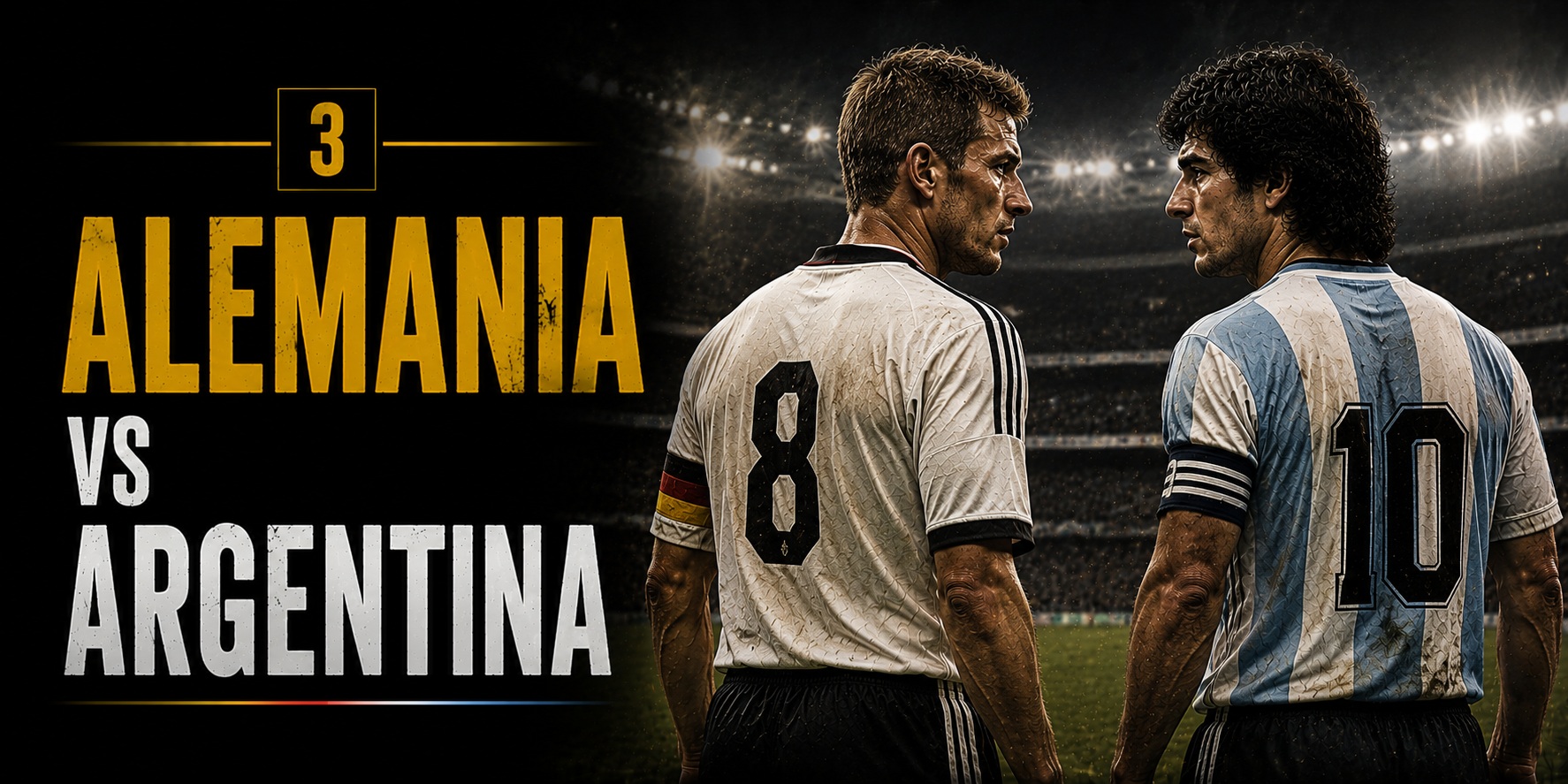
3. Alemania vs Argentina
 Visual creado con IA
Tres finales del Mundial entre estos dos. Tres. Eso no es coincidencia, es destino.
1986, la Argentina de Maradona vence a Alemania Occidental 3-2 en México. 1990, Alemania Occidental se cobra venganza en Roma, 1-0, un penal de Andreas Brehme, Maradona llorando en la cancha como un niño. 2014, la definición de zurda de Mario Götze al minuto 113 en el Maracaná. La oportunidad de Messi de ser Maradona, esfumada. Alemania campeona.
Y 2010, los cuartos de final, Alemania humilla a Argentina 4-0. Maradona era el técnico. La imagen de él sentado solo después, perdido, desinflado, se convirtió en la foto de aquel torneo para muchos.
No hay dos países que hayan chocado más seguido en los escenarios más grandes del Mundial. Puro futbol, sin verdadero bagaje político. Solo dos gigantes que no pueden evitarse.
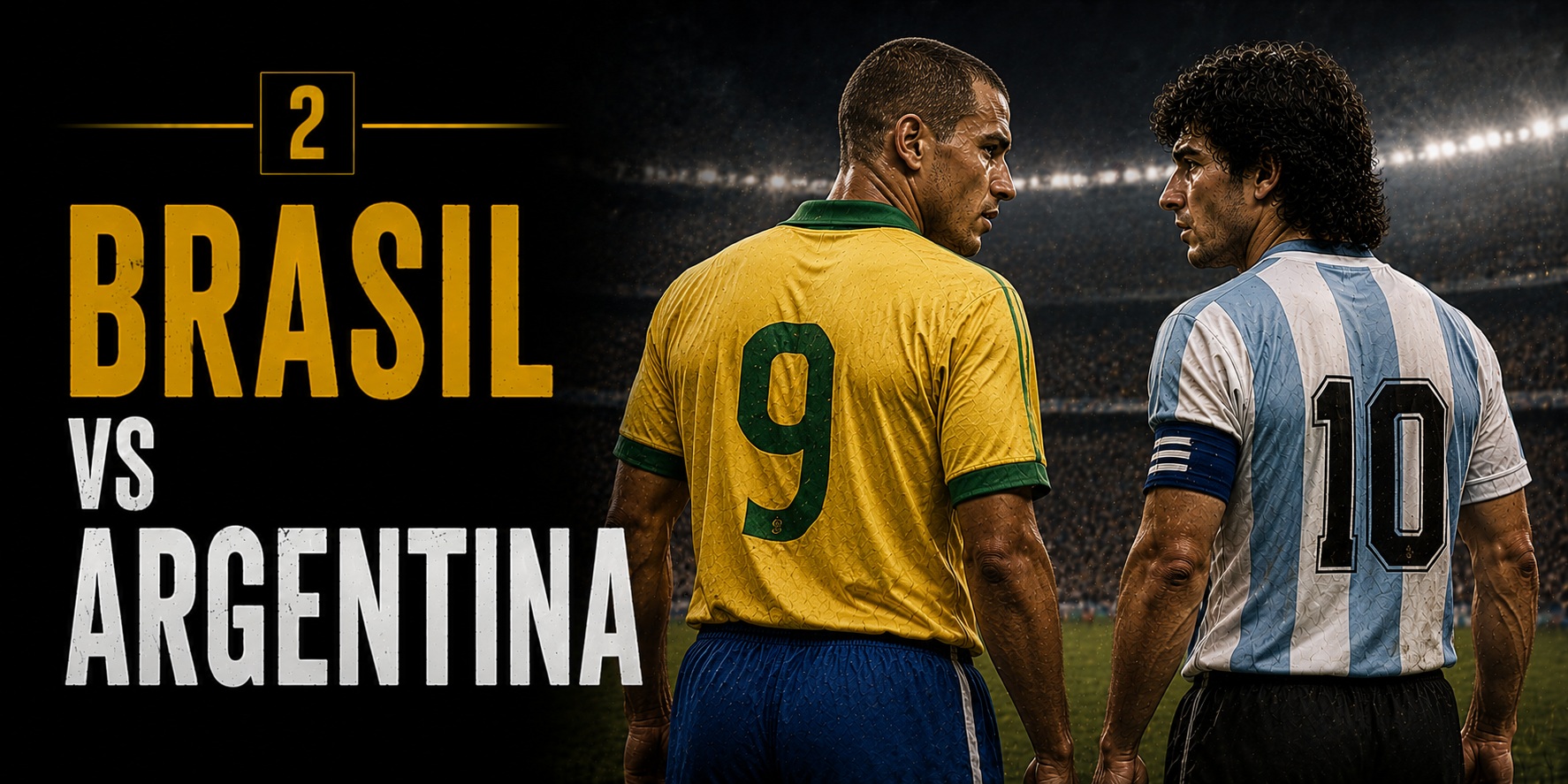
2. Brasil vs Argentina
 Visual creado con IA
La eterna guerra civil de Sudamérica. Lo curioso es que en realidad se han enfrentado menos veces en el Mundial de lo que pensarías. Pero cada encuentro importa. 1978, 1982, 1990, 2018 en grupos, pero los Octavos de Final de 1990 en Turín son los que perduran.
Maradona, apenas capaz de caminar, se arrastra entre cuatro defensores brasileños y mete un pase a Caniggia, que marca. Brasil eliminado. Argentina avanza. Años después, surgió la famosa historia del “agua bendita”. Branco, el jugador brasileño, afirmó que el cuerpo técnico de Argentina le ofreció una botella de agua adulterada durante el partido. Cierta o no, la leyenda se quedó.
Las rivalidades de selecciones nacionales de futbol entre estos dos van más allá del Mundial, obviamente. Copa América, amistosos, torneos juveniles, todo es guerra. Pero en el Mundial, cada encuentro carga con el peso del orgullo de un continente.
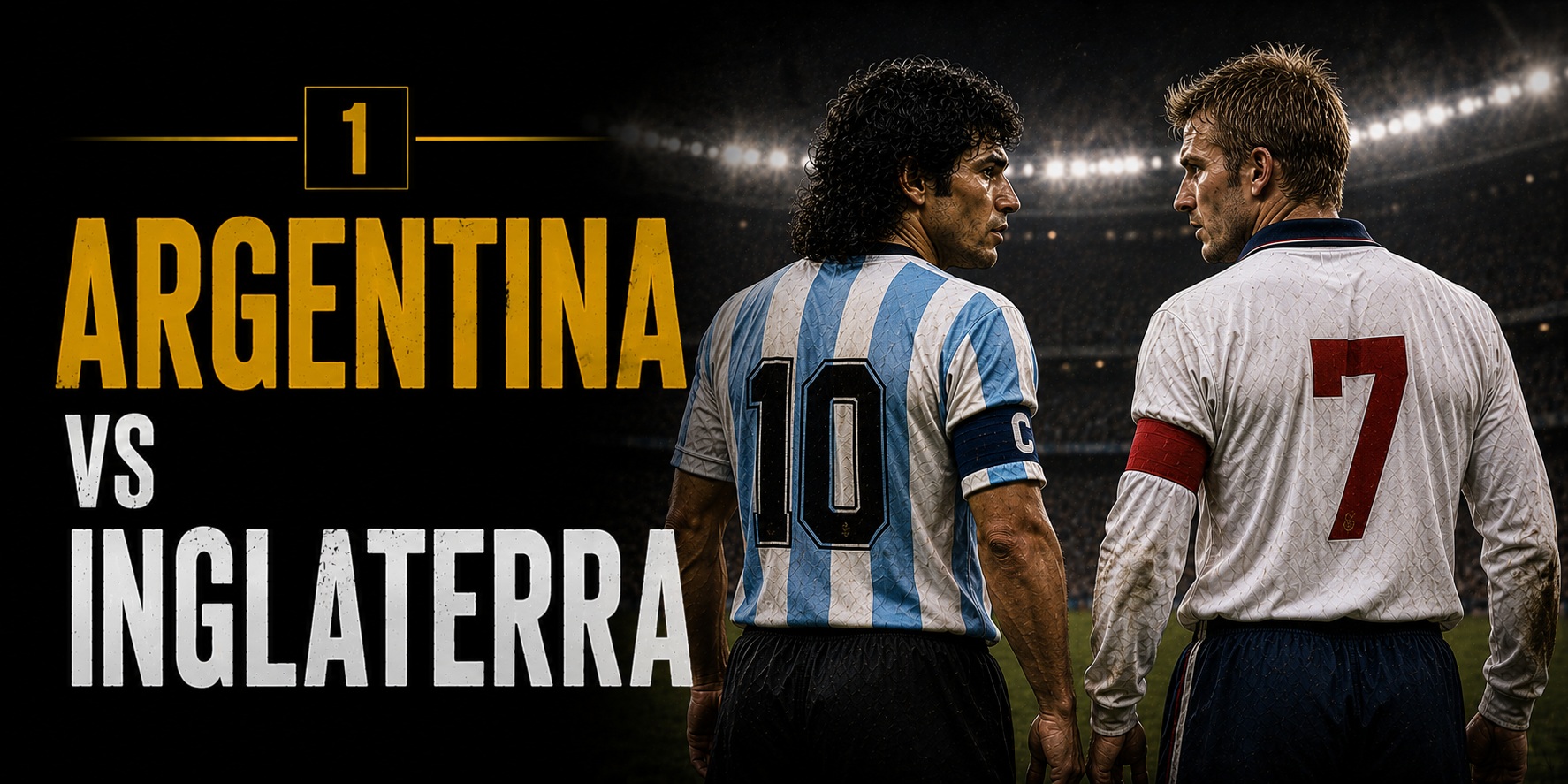
1. Argentina vs Inglaterra (sí, otra vez, en la cima)
 Visual creado con IA
Bueno, quizás no estés de acuerdo aquí. Muchos historiadores del futbol pondrían a Brasil-Argentina o Alemania-Argentina en el número uno. Es justo.
Pero si vamos a ser honestos sobre qué define una rivalidad del Mundial – la onda expansiva cultural, el trasfondo político, el momento icónico singular que trasciende el deporte mismo – Inglaterra vs Argentina lo tiene todo. Las Malvinas. Maradona. Beckham. Simeone. El golazo de Owen en el ’98. Los penales. Las recriminaciones.
Ninguna otra rivalidad produjo tanto la Mano de Dios como el Gol del Siglo en el mismo partido. Eso es mitología, no solo futbol. Y el hecho de que todo haya pasado en México, en nuestro suelo, con nuestra afición viendo, también lo hace nuestro en alguna pequeña medida.
El Debate de la Rivalidad Más Amarga
Entonces ¿quién es realmente dueño de la corona? Depende de qué te importe de verdad.
Si valoras las finales repetidas y la pura historia del Mundial por trofeos en juego, Alemania vs Argentina se la lleva. Tres finales. Nada más se le acerca.
Si valoras la trascendencia cultural y el momento icónico singular, Inglaterra vs Argentina es intocable. La Mano de Dios por sí sola es más famosa que la mayoría de las rivalidades enteras.
Si valoras el orgullo continental y la profundidad del odio mutuo, Brasil vs Argentina gana fácil. Pregúntale a cualquier argentino o brasileño a quién odia más. La respuesta llega al instante.
Y aquí en México, la rivalidad de México vs Argentina se siente más visceral que cualquiera de ellas, aunque los de afuera no la ubiquen tan alto. Porque las rivalidades no son solo sobre los libros de historia. Son sobre cuál derrota todavía puedes sentir en el pecho 16 años después.
No hay una respuesta objetivamente correcta. Esa es la belleza de todo esto.
Por Qué las Rivalidades del Mundial Se Sienten Más Grandes que las de Clubes
El Clásico es un teatro fantástico. Los derbis de Manchester, los derbis de Milán, el Superclásico en Buenos Aires, todos increíbles. Pero ninguno carga con lo que carga una rivalidad del Mundial.
Y creo que la razón es bastante simple, en realidad.
Las rivalidades de clubes pasan cada temporada. A veces dos veces por temporada. Las victorias y derrotas se diluyen. Pierdes hoy, ganas en tres meses. La vida sigue.
¿Las rivalidades del Mundial? Esperas cuatro años. A veces ocho. A veces toda tu vida adulta por la revancha. Y cuando por fin llega, la plantilla es distinta, el técnico es distinto, medio país ya pasó de página – pero la herida no. El encuentro de Argentina-Brasil de 1990 todavía atormenta a brasileños que ni siquiera habían nacido cuando ocurrió. El futbol de clubes no le hace eso a la gente. Simplemente no funciona así.
Luego está la camiseta misma. Vestir una playera nacional no es como vestir los colores de tu club. Estás representando a tu abuela, a tu colonia, al niño que vio la final del ’86 en un televisor en blanco y negro. No te pueden vender a un rival el próximo verano. Esa selección nacional es tuya para siempre, con buenos resultados o con resultados absolutamente terribles.
Y el peso político. Las Malvinas. El Muro de Berlín. La ocupación nazi de Holanda. El bagaje colonial entre Europa y Sudamérica. El futbol de clubes tiene rivalidades construidas sobre el orgullo de barrio. El futbol internacional tiene rivalidades construidas sobre historia real. Balas reales disparadas entre países reales.
Por eso un partido de 90 minutos entre dos naciones que se odian siempre se sentirá más pesado que 90 minutos entre dos ciudades. Las rivalidades históricas del Mundial que acabamos de recorrer en realidad no son solo partidos de futbol en un libro de récords. Son capítulos de historias mucho más largas, y la siguiente ya se está escribiendo en algún lugar – por un niño pateando un balón contra una pared, soñando con romper el corazón de alguien más en un estadio que aún no ha visto.
Eso es todo, en realidad. Por eso nadie deja de ver jamás.