
La Nueva Expansión del Mundial 2026: Cómo Funciona el Formato de 12 Grupos
 Visual creado con IA
 Si la última vez que de verdad pusiste atención al Mundial fue Qatar 2022, te espera una sorpresa. El formato mundial 2026 trae 48 selecciones, 12 grupos y una ronda que nunca antes se había visto en este torneo: los dieciseisavos mundial 2026 – el Round of 32 para los que hablan inglés.
Aquí tienes un repaso sencillo de lo que viene. Sin tecnicismos de la FIFA, sin hojas de cálculo. Solo lo que de verdad necesitas para seguir los partidos, discutir en el bar o hacer una apuesta inteligente.
Por Qué la FIFA Cambió el Formato del Mundial para 2026
 Visual creado con IA
La votación de la expansión que casi nadie peleó
En enero de 2017, el Consejo de la FIFA votó para crecer el Mundial de 32 selecciones a 48 selecciones. La votación fue básicamente unánime. Algunos refunfuñaron – más partidos, más cansancio, posible baja de calidad – pero las cuentas del dinero eran demasiado obvias para ignorarlas.
Más países jugando significa más federaciones contentas, más contratos de transmisión, más patrocinadores. Esa es la versión honesta. La FIFA lo presentó como “hacer crecer el deporte a nivel global”, y siendo justos, esa parte también se sostiene. Países que nunca habían estado ni cerca de un Mundial ahora tienen una oportunidad real.
Tres sedes, un torneo gigantesco
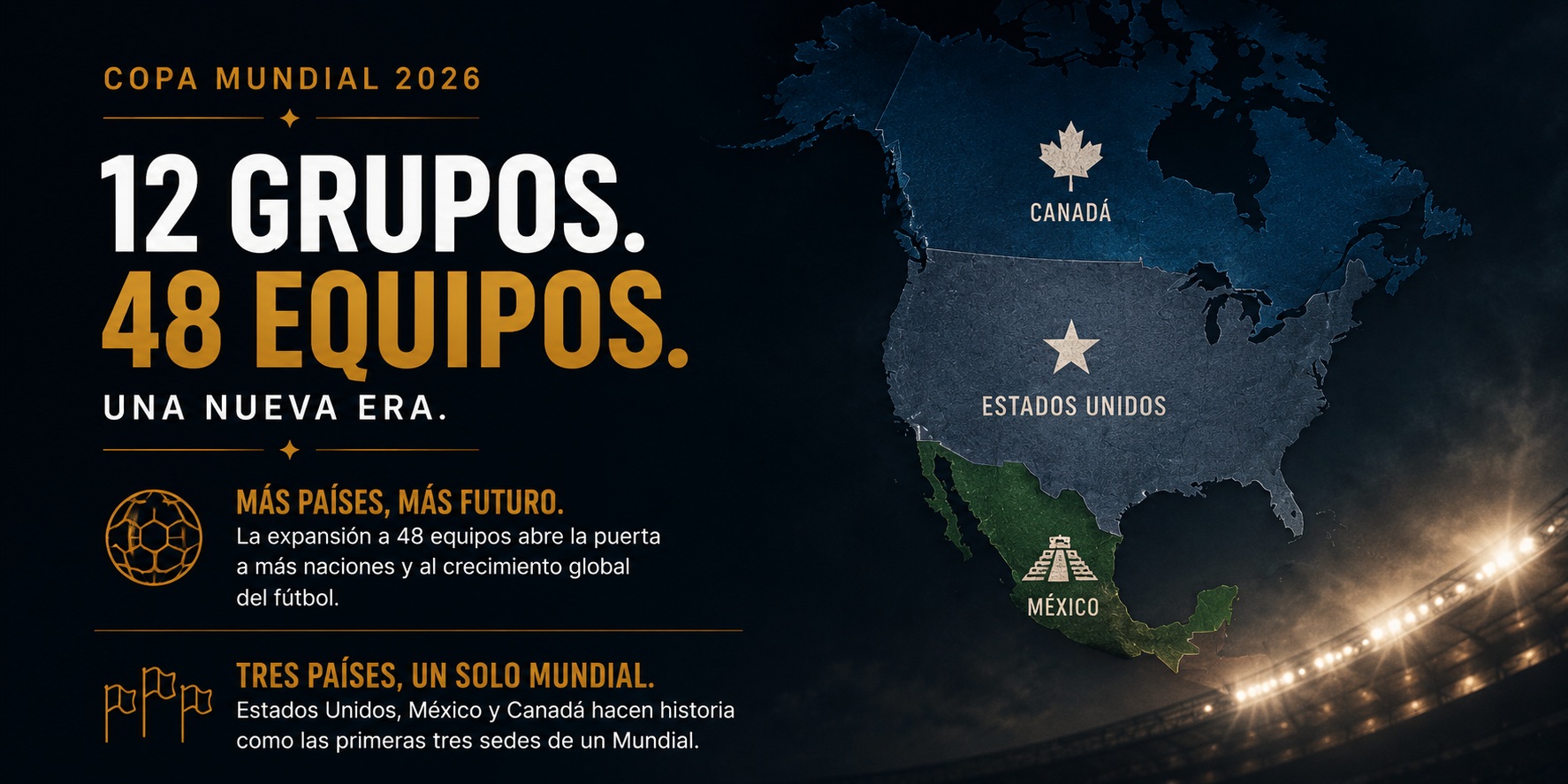
Ningún Mundial había sido co-organizado por tres países antes de este. Estados Unidos, México y Canadá se reparten las responsabilidades, con Estados Unidos llevándose la mayor parte de los partidos – alrededor de 78 – mientras México y Canadá se reparten el resto.
Que México sea sede por tercera vez también es un récord. Nadie lo había hecho antes. ¿Y el partido inaugural en el Estadio Azteca? Eso se va a sentir como un evento sin importar qué selecciones estén en la cancha. Ese estadio tiene historia grabada en sus paredes.
Cómo Funcionan los 12 Grupos de Cuatro
 Visual creado con IA
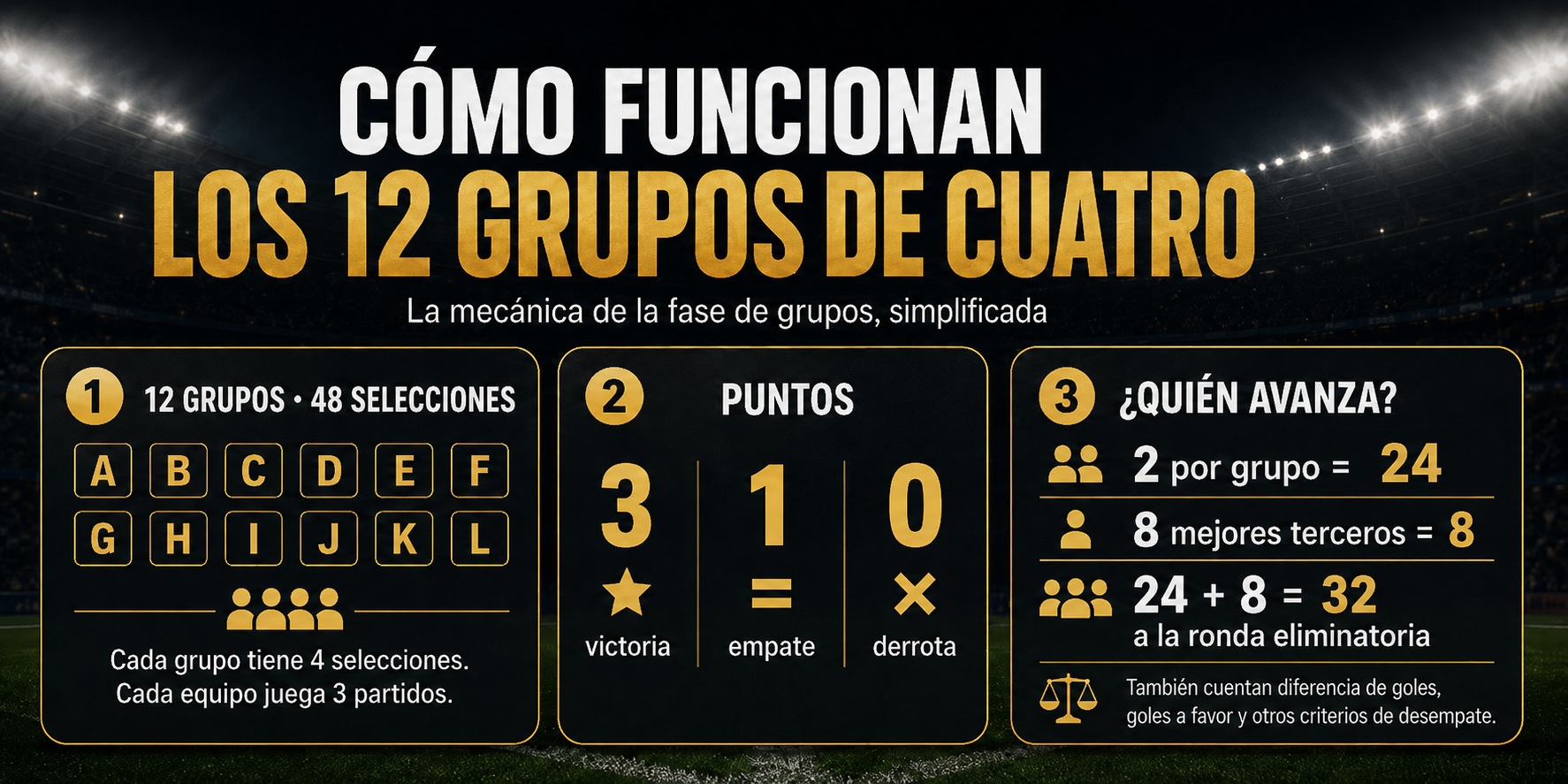
La mecánica de la fase de grupos, simplificada
Tienes 48 selecciones divididas en 12 grupos (de la A a la L), cuatro selecciones por grupo. Cada selección juega contra las otras tres una vez. Tres partidos de grupo por selección, igual que antes. Esa parte todavía se siente familiar.
Puntuación sencilla: 3 puntos por victoria, 1 por empate, nada por derrota. La siembra funciona como esperarías. El Bombo 1 tiene a las selecciones anfitrionas y a los clasificados mejor rankeados. Los Bombos 2, 3 y 4 se completan según el ranking FIFA. El sorteo mantiene separadas a las selecciones de la misma confederación donde sea posible – excepto la UEFA, porque Europa tiene tantos clasificados que simplemente no es realista aislarlos a todos.
Quién avanza y cómo
Aquí es donde se pone interesante. De cada grupo:
- Las 2 mejores selecciones avanzan automáticamente (24 selecciones en total)
- Los 8 mejores terceros lugares de los 12 grupos también pasan
24 más 8 te da 32 selecciones en la ronda eliminatoria – exactamente el tamaño de la fase de grupos del viejo Mundial. Curioso cómo cuadró esa cuenta.
Los criterios de desempate dentro de un grupo siguen este orden: puntos, diferencia de goles, goles a favor, resultado del enfrentamiento directo, registro disciplinario y luego un sorteo si todo lo demás sigue empatado. Sí, el sorteo todavía existe. Imagina quedar eliminado por un volado. No es bonito.
Los Nuevos Dieciseisavos de Final
Por qué esta ronda es histórica
El Mundial nunca había tenido unos dieciseisavos de final. La fase de grupos solía meter a los sobrevivientes directamente a los octavos de final. Ahora hay un paso eliminatorio extra en medio, y eso cambia todo el ritmo del torneo.
El término dieciseisavos de final se refiere a los 16 partidos que se juegan antes de la final en sí. Los aficionados hispanohablantes ya usan esta frase para la Copa del Rey y torneos similares, así que si tu tío empieza a soltar la palabra en 2026, ahora vas a saber exactamente a qué se refiere.
Cómo se arma el cuadro
Una vez confirmadas las 32 selecciones, la FIFA las acomoda en un cuadro predefinido según su posición de grupo. Los líderes de grupo obtienen, en teoría, enfrentamientos más fáciles – contra clasificados de tercer lugar o segundos lugares más débiles. El cuadro queda fijo antes de que arranque el torneo, así que puedes trazar el camino hipotético de una selección desde el primer día. ¿Ganas el Grupo A? Enfrentarás esta posición. ¿Quedas segundo en el Grupo B? Enfrentarás aquella.
Algo que vale la pena saber: el campeón ahora juega 8 partidos en total para levantar el trofeo. Tres en la fase de grupos, cinco en las eliminatorias. Eso es uno más que antes. Mucho fútbol concentrado en cinco semanas.
Cómo se Eligen las 8 Mejores Selecciones de Tercer Lugar
 Visual creado con IA
El sistema de ranking, tomado prestado de la Euro
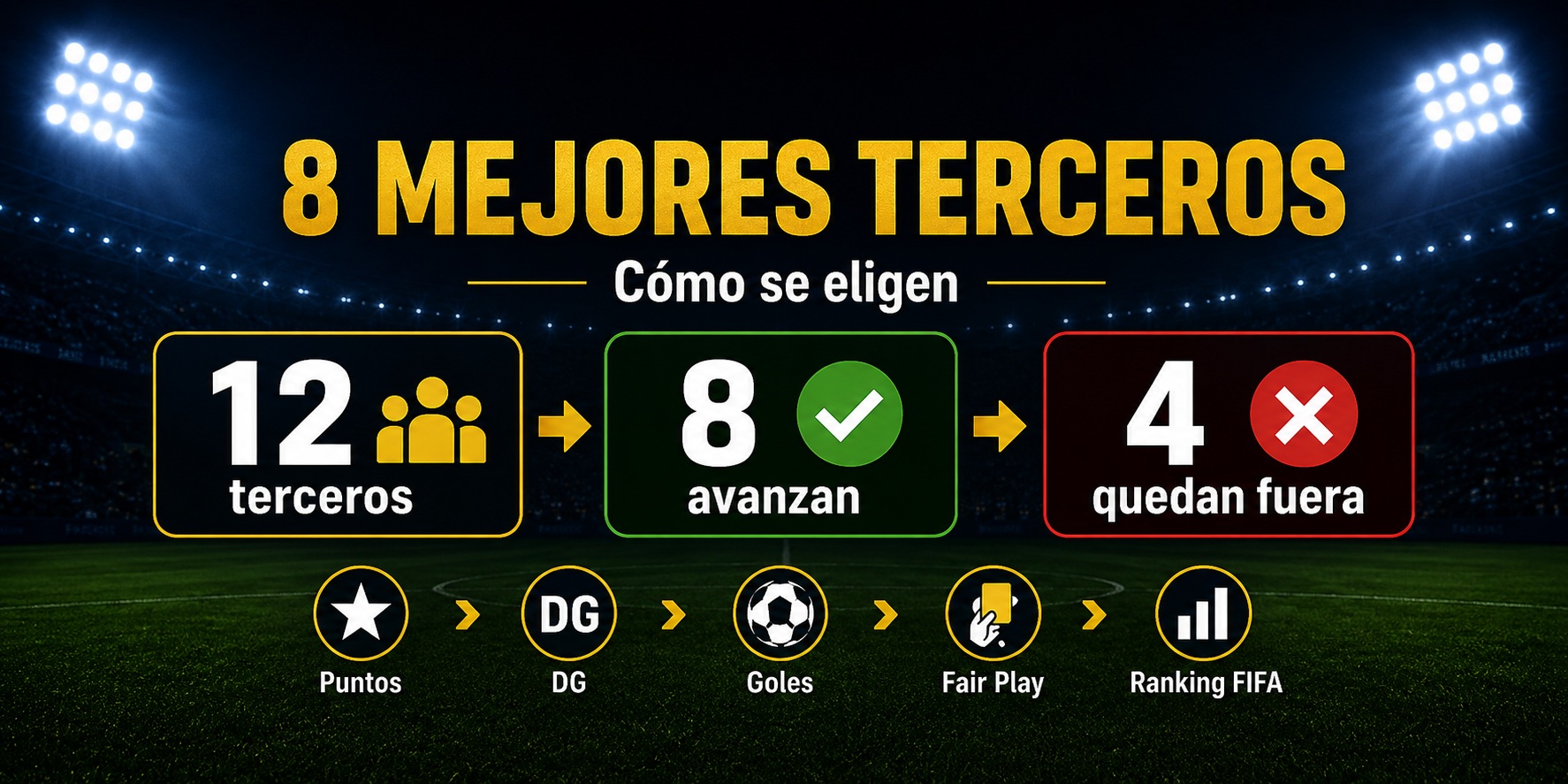
Esto no es una idea nueva. La Euro 2016 y la Euro 2020 usaron un sistema de mejores terceros para completar el cuadro. La UEFA básicamente escribió el manual sobre esto, y la FIFA tomó notas.
Las 12 selecciones de tercer lugar se comparan entre sí usando: puntos, luego diferencia de goles, luego goles a favor, luego registro disciplinario y luego ranking FIFA. Las 8 mejores pasan. Las 4 últimas se van a casa.
Así que quedar tercero no es automáticamente una sentencia de muerte. Solo necesitas verte mejor que al menos otras cuatro selecciones de tercer lugar a lo largo de todo el torneo. Eso es muy alcanzable en un buen día.
Escenario interactivo: ¿Avanzará México como tercer lugar?
Dos hipótesis rápidas. Digamos que México está en el Grupo A y termina tercero detrás de dos selecciones más fuertes.
Escenario 1: México termina con 3 puntos, DG -1
Una victoria, dos derrotas, recibió más goles de los que metió. En los otros 11 grupos, esperarías que la mayoría de las selecciones de tercer lugar tengan 4 puntos o más, o al menos una diferencia de goles más limpia. México probablemente se va a casa en este caso. Los números simplemente no están ahí.
Escenario 2: México termina con 4 puntos, DG 0
Victoria, empate, derrota. Empatado en goles. Esa es una foto mucho más saludable. Históricamente en los torneos de la Euro, 4 puntos han sido suficientes para colarse. México probablemente lo lograría en este escenario, aunque podría reducirse a los goles a favor como criterio de desempate frente a otra selección con los mismos 4 puntos.
La conclusión: un empate extra puede ser la diferencia entre irte a casa y jugar en los dieciseisavos. Cada minuto cuenta, incluso cuando vas perdiendo 2-0 en el minuto 89.
104 Partidos en 39 Días: El Calendario Completo
El calendario de un vistazo
El torneo se juega del 11 de junio al 19 de julio de 2026. Treinta y nueve días. El total de partidos salta de 64 en Qatar hasta 104 partidos. Eso son 40 juegos extra. Cuarenta.
El partido inaugural se lo lleva el Estadio Azteca en la Ciudad de México. La final es en el MetLife Stadium en Nueva Jersey, justo a las afueras de Nueva York. Otras sedes importantes incluyen el SoFi en Los Ángeles, el AT&T en Dallas y el Mercedes-Benz en Atlanta.
Lo que esto significa día con día
Durante la fase de grupos, vas a tener partidos prácticamente sin parar. A veces 4 o 5 en un solo día. Los aficionados de hueso colorado igual se van a perder partidos – de verdad no hay forma de evitarlo con este volumen.
El calendario también pinta complicado para los aficionados que viajan. Tres países sede, distancias enormes entre las sedes. Si tu selección juega en Vancouver una semana y en Guadalajara la siguiente, probablemente no vas a hacer ambos viajes a menos que el dinero no sea problema.
Lo que el Nuevo Formato Significa para Aficionados y Apostadores
Cuotas, props y el factor sorpresa
Más selecciones es igual a más caos. Buenas noticias si te gustan los no favoritos, malas noticias si confías ciegamente en los favoritos. El formato mundial 2026 casi con seguridad producirá al menos una o dos carreras impactantes de países que no habrías elegido ni en un millón de años.
Para los apostadores, el nuevo formato abre mercados que simplemente no existían antes:
- Props de ganador de grupo para los 12 grupos (subiendo de 8)
- Mercados de mejor clasificado de tercer lugar – territorio completamente nuevo
- Futuros de avanzar desde los dieciseisavos, también nuevos
- Apuestas a campeón del torneo de larga distancia con mejores precios porque el campo es más profundo
Las casas de apuestas todavía están descifrando cómo fijar las cuotas de algunos de estos mercados. Ahí es donde suele esconderse el valor – en los rincones donde no hay datos históricos para anclar las cuotas.
La ventana de las sorpresas es más amplia
Una ronda eliminatoria más significa una oportunidad más para que una selección Cenicienta gane un solo partido y siga soñando. Una selección que se cuela con 4 puntos en tercer lugar podría realísticamente eliminar a un líder de grupo cansado en los dieciseisavos. Lo hemos visto pasar en la Euro muchas veces.
Personalmente, los octavos de final siempre se sintieron como el momento en que empezaba el verdadero Mundial. Ahora ese momento podría adelantarse a los dieciseisavos. Esos partidos van a estar ruidosos.
Preguntas Frecuentes Sobre el Formato 2026
Respuestas rápidas a las preguntas obvias
¿Cuántos partidos juega el campeón?
Ocho. Tres partidos de fase de grupos, luego cinco rondas eliminatorias: dieciseisavos, octavos, cuartos, semifinal y final.
¿Cuál es el criterio de desempate si dos selecciones terminan empatadas en un grupo?
Puntos, luego diferencia de goles, luego goles a favor, luego resultado del enfrentamiento directo, luego registro disciplinario, luego un sorteo aleatorio. En ese orden exacto.
¿Habrá tiempo extra y penales en los dieciseisavos?
Sí. Todos los partidos eliminatorios usan tiempo extra y tanda de penales si es necesario. Las mismas reglas de siempre.
¿Pueden tres selecciones de la misma confederación estar en un grupo?
Para la UEFA, sí – Europa simplemente tiene demasiados clasificados para evitarlo. Para otras confederaciones, generalmente no.
La lógica del cuadro en una sola frase
Los 2 mejores de cada grupo más los 8 mejores terceros es igual a 32. Esas 32 juegan los dieciseisavos. Los ganadores llegan a octavos, luego cuartos, semis y final. El cuadro está pre-sorteado, así que puedes mapear los caminos posibles antes de que se patee un solo balón.
Un detalle tramposo: terminar primero en tu grupo vale más de lo que solía valer. Los líderes de grupo obtienen el sorteo en teoría más fácil al principio de las eliminatorias. No dejes que una selección se relaje en su último partido de grupo – dónde terminas de verdad importa aquí.
Así Que, Ahora Ya Sabes
48 selecciones, 12 grupos, 104 partidos, 39 días y unos dieciseisavos que el Mundial nunca había visto antes. Cuando tus amigos empiecen a preguntar cómo funciona el cuadro el próximo junio, de verdad vas a poder explicarlo en lugar de solo asentir con confianza y rezar para que nadie te repregunte.
¿Será perfecto? Probablemente no. Algunos partidos de grupo podrían sentirse sin sentido porque terminar tercero todavía te puede meter. Algunos enfrentamientos de dieciseisavos podrían ser de un solo lado. Pero honestamente, hay algo emocionante en un formato tan grande y tan nuevo – nadie sabe exactamente cómo se va a desarrollar todavía. Que México abra en el Azteca ya es razón suficiente para emocionarse, sin importar todo lo demás.
Elige a tu caballo negro. Tienes tiempo.